

What Is the Mount Batur Trekking Trail Like? Terrain, Volcanic Sand and Trail Conditions
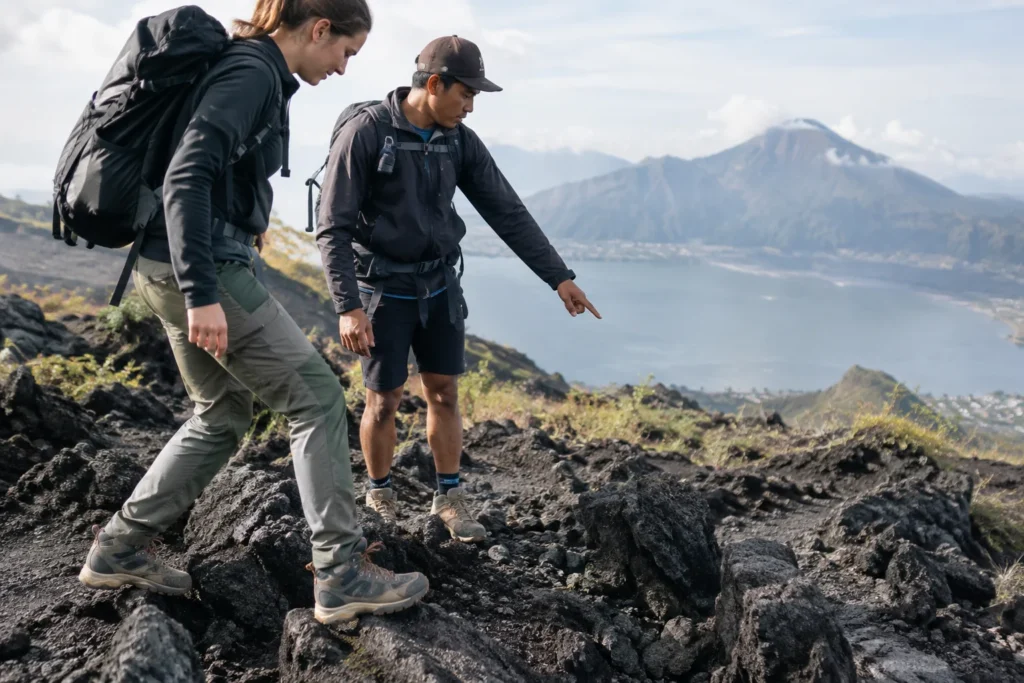
Before booking a sunrise hike, many visitors want to know one practical thing: what does the Mount Batur trekking trail actually feel like underfoot? Is it a smooth walking path, loose volcanic sand, sharp rock, or a mixture of all three? The answer is that the route changes as you gain elevation. Understanding those changes helps you choose suitable footwear, walk at a comfortable pace, and enjoy the climb without being surprised by the ground beneath you.
Mount Batur is an active volcano in Kintamani, Bali. Its trekking routes cross a landscape shaped by volcanic activity, weather and regular use by hikers. This guide focuses on trail surfaces and terrain—not on comparing tour prices or repeating a general sunrise itinerary. You will learn what the ground can be like, where extra care is useful, and how to prepare for a more comfortable walk.
A quick overview: expect more than one type of surface
There is no single surface across the entire Mount Batur route. Depending on the starting point, chosen trail and recent weather, hikers may encounter compacted earth, loose volcanic gravel, dark sand, uneven stones and sections of rougher volcanic rock. Some stretches are relatively straightforward, while others require shorter steps and more attention to foot placement.
- Lower trail: often a mixture of compacted dirt, gravel and loose material.
- Steeper sections: may contain loose volcanic sand or small stones that move underfoot.
- Rockier areas: can have irregular surfaces, so stable footing matters more than speed.
- Near the upper area: the terrain can remain uneven, with exposed volcanic ground and rocks.
1. Compacted dirt and gravel near the lower trail
On some lower sections, the trail feels like a familiar hillside path. Repeated foot traffic can make parts of the ground relatively firm, although small stones and patches of loose material may still be present. These stretches are usually easier to walk when you keep a steady rhythm and avoid rushing past other hikers.
Do not assume that every part of the lower route will be flat or perfectly maintained. Natural trails change with rainfall, erosion and daily use. A surface that feels firm on one visit may be softer or more uneven after wet weather. Follow your guide’s chosen route and pay attention when the path narrows.
2. Loose volcanic sand and small stones on steeper slopes
One of the details that surprises first-time hikers is how loose volcanic material can feel on an incline. Fine dark sand and small fragments of rock may shift slightly when you step on them. This does not mean the entire mountain is covered in deep sand; rather, loose patches can appear between firmer sections and make an uphill step feel less secure.
On these slopes, take shorter steps and place your whole foot carefully. Avoid making long, forceful strides, especially when the person in front of you is moving slowly. If your foot slips, pause, regain balance and continue at a controlled pace. Trekking poles can provide an additional point of contact, particularly for people who are not used to walking on loose ground.
3. Rough volcanic rock and uneven ground
Mount Batur’s volcanic setting means that some areas have rough, irregular rock. Stones can vary in size and shape, and the spaces between them may make the trail feel uneven. Look ahead rather than staring only at your shoes: choosing a stable line a few steps in front of you makes it easier to keep your balance.
Volcanic rock is part of the mountain’s character, but it should not be treated as a climbing wall. Stay on the established route, use the footholds indicated by your guide and do not scramble onto unstable rocks just to take a photograph. For a closer look at how past eruptions shaped the area’s dark landscape, read our guide to Mount Batur’s black lava fields.
4. How rain and early-morning conditions affect the trail
Trail conditions are not fixed. Rain can make compacted earth muddy, loosen fine material and leave some rocks damp or slippery. Even when it is not raining during your hike, moisture from earlier showers or overnight conditions may affect shaded sections. Before setting out, listen to your guide’s assessment of the route and follow any safety instructions.
It is also worth remembering that a sunrise trek begins in darkness. Your headlamp or flashlight helps you see the ground immediately in front of you, but it does not remove the need to walk carefully. Keep enough distance from the hiker ahead so that you can see the trail rather than only their feet. Do not switch off your light simply because the sky is beginning to brighten.
5. What footwear works best?
For most visitors, comfortable hiking shoes or trail shoes with a secure fit and a grippy outsole are a sensible choice. You do not necessarily need heavy mountaineering boots for a guided Mount Batur sunrise trek, but footwear should protect your toes and help you maintain traction on mixed ground.
- Choose a secure fit: your heel should not slide around inside the shoe on downhill sections.
- Look for useful tread: a patterned rubber outsole is generally more suitable than a smooth fashion sneaker sole.
- Avoid brand-new shoes: wear them beforehand so you know they do not rub or cause blisters.
- Use suitable socks: comfortable socks can reduce friction and help prevent hot spots.
- Skip open sandals: they offer less protection from stones and uneven ground.
6. Walking technique: small steps are often better
You do not need to race up Mount Batur. On loose or uneven ground, a controlled pace is usually more useful than trying to keep up with faster hikers. Keep your knees relaxed, take shorter steps on steep sections and use your arms naturally for balance. If you feel tired, tell your guide and take a short rest in a safe place away from the main flow of hikers.
When descending, avoid leaning too far backwards or allowing your feet to slide downhill. Bend your knees slightly, place each step deliberately and use trekking poles if you are comfortable with them. The descent can feel different from the ascent because loose material may move beneath your shoes.
7. Is the trail suitable for beginners?
Many first-time hikers complete a guided Mount Batur sunrise trek, but beginner-friendly does not mean effortless or completely smooth. The route includes uphill walking in low light and may contain loose or rocky sections. Your experience will depend on your fitness, pace, weather, the route used and how comfortable you are on natural trails.
If you rarely hike, start with realistic expectations. Tell your guide about any concerns before the climb, take breaks when needed and do not feel pressured to move at another group’s speed. For a broader explanation of the physical demands, see our article Is Mount Batur hard? A realistic guide to the difficulty.
8. What should you bring for mixed trail conditions?
A few simple items make a meaningful difference on a pre-dawn hike. Keep your hands free where possible, carry only what you need and make sure your light is ready before leaving the starting point.
- Hiking or trail shoes with a secure fit and good grip.
- A light jacket or warm layer for the cool early morning.
- A small amount of drinking water.
- A flashlight or headlamp with sufficient battery.
- Optional trekking poles if you are familiar with using them.
- A small bag that does not swing around while you walk.
9. Respect the landscape and stay on the route
Mount Batur is more than a viewpoint; it is an active volcanic landscape and an important part of the Kintamani area. Stay on the route recommended by your guide, avoid removing rocks or natural material, and take all rubbish back with you. Do not approach unstable edges or enter restricted areas for a better photograph.
For background on the volcano’s activity and geological setting, consult the Smithsonian Global Volcanism Program profile for Batur. Conditions and access guidance can change, so local instructions on the day should always take priority over an old online description.
Frequently asked questions about the Mount Batur trail
Is the Mount Batur trail rocky?
Some sections are rocky and uneven, while others may consist of compacted dirt, gravel or loose volcanic sand. The exact mix depends on the route and recent weather.
Is there loose sand on Mount Batur?
Loose dark volcanic material and small stones can occur on parts of the trail, particularly on steeper ground. Short, controlled steps and shoes with good traction can help.
Can I hike Mount Batur in running shoes?
Some running shoes may work if they fit securely and have suitable tread, but smooth-soled or worn-out shoes are not a good choice. Trail shoes or hiking shoes generally provide more confidence on uneven surfaces.
Does the trail become slippery after rain?
It can. Damp soil, loose material and wet rocks may reduce traction. Follow your guide’s advice and be prepared for slower progress if conditions are wet.
Are trekking poles necessary?
They are not essential for every hiker, but some people find them useful on loose slopes and during the descent. Use them only if you can handle them comfortably without disturbing other hikers.
Can beginners walk the Mount Batur trail?
Many beginners join guided treks, but they should be prepared for uphill walking and uneven natural terrain. Choose a pace that suits your ability and tell your guide if you need a break.
Plan your Mount Batur sunrise trek
Knowing what the trail is made of can help you arrive with the right shoes and a sensible mindset. Expect a natural mountain path rather than a paved walkway, take your time on loose or rocky sections, and follow your local guide’s instructions throughout the climb.
When you are ready, explore the Mount Batur Sunrise Trekking website or check the available options on our Mount Batur trekking booking page. Choose the experience that fits your plans and ask about current trail conditions before your activity.