

Why Does Kintamani Get Misty? Understanding Clouds, Fog and Highland Visibility
Visitors arriving in Kintamani sometimes find the landscape completely clear, while on another day the caldera, lake or mountain slopes are partly hidden by drifting cloud. This changing visibility is a normal part of spending time in Bali’s highlands. Mist and low cloud can transform the scenery within a short period, creating a quiet atmosphere but also making distant views difficult to see.
This guide explains why Kintamani can look misty, what affects visibility around the Batur caldera, how cloud differs from ground-level fog, and how to plan a visit when the view is uncertain. It is a general guide rather than a live weather forecast: conditions can change quickly, so check a current forecast and follow local advice on the day.
Why does Kintamani sometimes look covered in mist?
Kintamani is a highland area, and air temperature generally decreases with elevation. When moist air rises or moves across higher terrain, it can cool. If it cools enough for water vapour to condense into tiny droplets, cloud can form. When a cloud base sits close to the ground or moves across a slope, it may appear to visitors as mist or fog.
The caldera’s varied elevations, slopes and open lake basin create different conditions from one location to another. A viewpoint may be covered while a nearby section is clearer. This is one reason photographs taken on different days can show dramatically different versions of the same landscape.
Cloud, mist and fog: what is the difference?
Cloud, mist and fog are closely related: all involve tiny water droplets suspended in the air. In everyday travel language, people often use the words interchangeably. The practical difference is how close the cloud is to the surface and how much it reduces visibility. A low cloud passing across a ridge may look like fog from the road, while a cloud layer above the caldera can hide the mountain without affecting visibility where you are standing.
For visitors, the important point is not the technical label. It is whether you can see the road, identify safe stopping places and enjoy the view. If visibility becomes poor while travelling, slow down, use appropriate lights and avoid stopping in exposed or unsafe locations.
Why the view can change so quickly
Mountain weather is influenced by moisture, temperature, wind and the movement of larger weather systems. As air moves over elevated terrain, cloud may build, drift or break apart. Sunlight can warm the ground and change local air movement, while rain showers can leave the landscape humid and cloud-covered.
This means a clear view at breakfast does not guarantee the same view an hour later. Equally, a misty start does not always mean the whole day will remain cloudy. If the scenery is hidden, consider waiting safely for a while rather than assuming the conditions will not change.
Does the dry season guarantee clear views?
No. Seasonal patterns can influence rainfall and cloudiness, but they do not guarantee visibility on a particular morning. Local cloud, wind and passing weather systems still matter. Even during generally drier periods, a highland viewpoint can be covered by cloud or haze.
During wetter periods, showers and more persistent cloud may occur more often, but conditions vary from day to day. Avoid planning a visit on the assumption that one month always produces perfect photographs. Check the forecast close to your travel date and keep your schedule flexible.
How mist changes the Mount Batur and Lake Batur scenery
When the caldera is clear, visitors may see the lake, volcanic slopes and distant ridges together. When mist moves through the area, the view becomes more layered: parts of the landscape disappear while nearer hills, trees or buildings remain visible. Some people enjoy this softer atmosphere, while others prefer a wide, unobstructed panorama.
If you are interested in the wider landscape rather than only the weather, read our guide to exploring the Batur caldera by road. For background on the lake itself, see Why Is Lake Batur Important to Bali? and our existing Lake Batur and Pura Ulun Danu Batur guide.
What should you do if the viewpoint is covered?
If cloud blocks the view, do not take risks trying to find a more dramatic or isolated viewpoint. Instead, consider a safe alternative: enjoy a warm drink at an established business, explore an appropriate local stop, or simply allow time for conditions to change. If you are on a guided activity, ask your guide or driver what is practical and safe.
- Check the latest local weather information before leaving.
- Allow extra time rather than building a tight schedule around one viewpoint.
- Use established viewing areas and legal parking places.
- Do not walk onto steep or unfamiliar ground to get above the cloud.
- Follow road safety advice if visibility is reduced.
- Have a backup activity that does not depend on a panoramic view.
Photography tips for misty conditions
Mist can make landscape photographs look atmospheric, but it also reduces contrast and can confuse a camera’s exposure. Rather than trying to force a distant mountain into every frame, look for nearer subjects such as trees, rooftops, lakeside details or layers of hills. These elements can give a photograph depth even when the far side of the caldera is hidden.
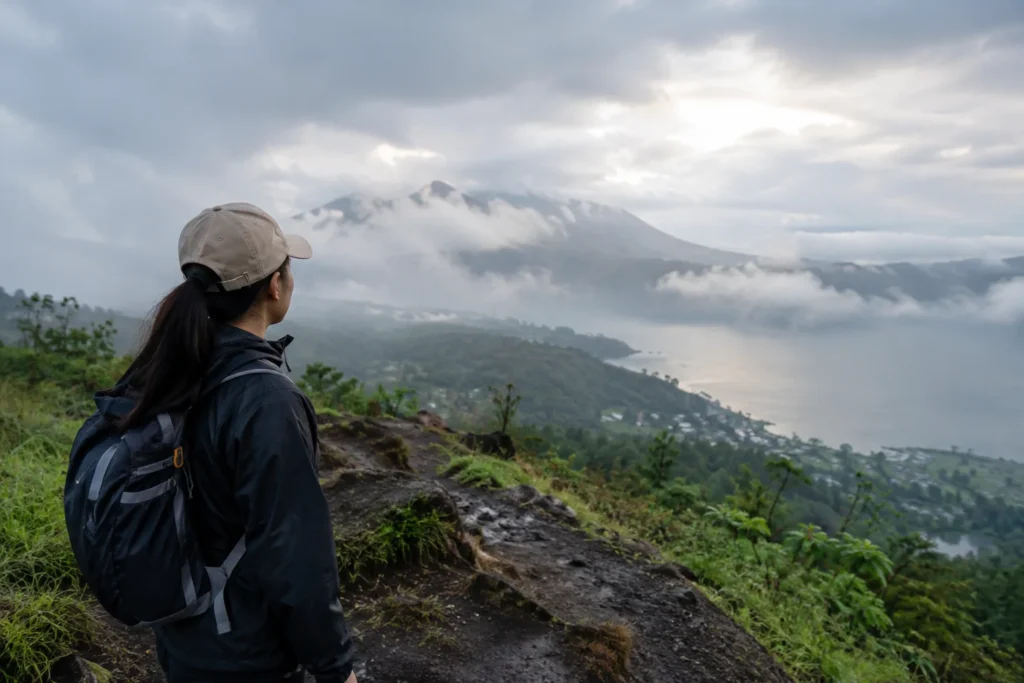
Protect your camera or phone from moisture, wipe the lens before taking a photograph and avoid changing lenses in damp conditions. If the cloud begins to lift, take a few wide shots as the landscape gradually appears. Always photograph from a safe, permitted place and never stand in the road.
Is mist a problem for Mount Batur sunrise trekking?
Mist and cloud can affect the view during a sunrise trek, but they do not automatically mean that a trek is cancelled. The decision to proceed depends on current conditions, safety assessments and local guidance. Visibility on the trail is a separate concern from whether the sunrise panorama will be clear.
For trekking-specific weather questions, read our guide to what happens if it rains on trek day and our article about Mount Batur Jeep sunrise in bad weather. Always follow the operator’s latest instructions rather than relying on a general article to make a safety decision.
Where can you check weather and visibility?
Use a reputable weather service close to your travel date and compare the forecast with local observations. Forecasts for a broad district may not capture conditions at a particular viewpoint or section of the caldera. Your local guide, accommodation or driver may also have useful information about what they are seeing nearby.
For general weather information, consult the Indonesian Meteorology, Climatology and Geophysics Agency (BMKG). Forecasts are guidance, not a guarantee of what a specific viewpoint will look like at a precise minute.
Frequently asked questions about Kintamani mist
Why is Kintamani often cloudy?
Kintamani is elevated terrain where moist air can cool and condense into cloud. Local topography and changing weather systems can make cloud more noticeable around the caldera and its ridges.
Does mist mean it will rain?
Not necessarily. Mist or low cloud can occur without rainfall, although both may be associated with moist atmospheric conditions. Check a current forecast for rain information.
Can the Mount Batur view clear after being covered in cloud?
It can. Cloud may move or break during the day, but there is no guarantee. Allow time if your schedule permits and enjoy other aspects of the area if the panorama remains hidden.
Is Kintamani misty every morning?
No. Conditions vary with season, weather patterns, wind and local conditions. Some mornings are clear, while others have low cloud, haze or rain.
Should I cancel my visit if the forecast shows clouds?
Cloud alone does not necessarily make a visit unsuitable. Consider the full forecast, road conditions and the purpose of your trip. For trekking or other activities, follow the operator’s safety advice.
Is it safe to drive when Kintamani is foggy?
Reduced visibility requires extra caution. Drive slowly, use appropriate vehicle lights, keep a safe distance and avoid stopping in the carriageway. If conditions are unsafe, delay the journey and follow local advice.
Enjoy Kintamani even when the view changes
Mist is part of the changing highland atmosphere around Kintamani. It can hide the caldera panorama, soften the landscape or lift to reveal a completely different view. Planning with flexibility, checking current conditions and choosing safe places to stop will help you enjoy the area whether the sky is clear or cloudy.
If a Mount Batur sunrise experience is part of your Bali plans, explore the Mount Batur Sunrise Trekking website and review the available booking options. Keep an eye on local conditions before your activity and follow the latest guidance from your operator.