

Can You Visit Trunyan Village from Mount Batur? Boat Access, Culture and Visitor Etiquette
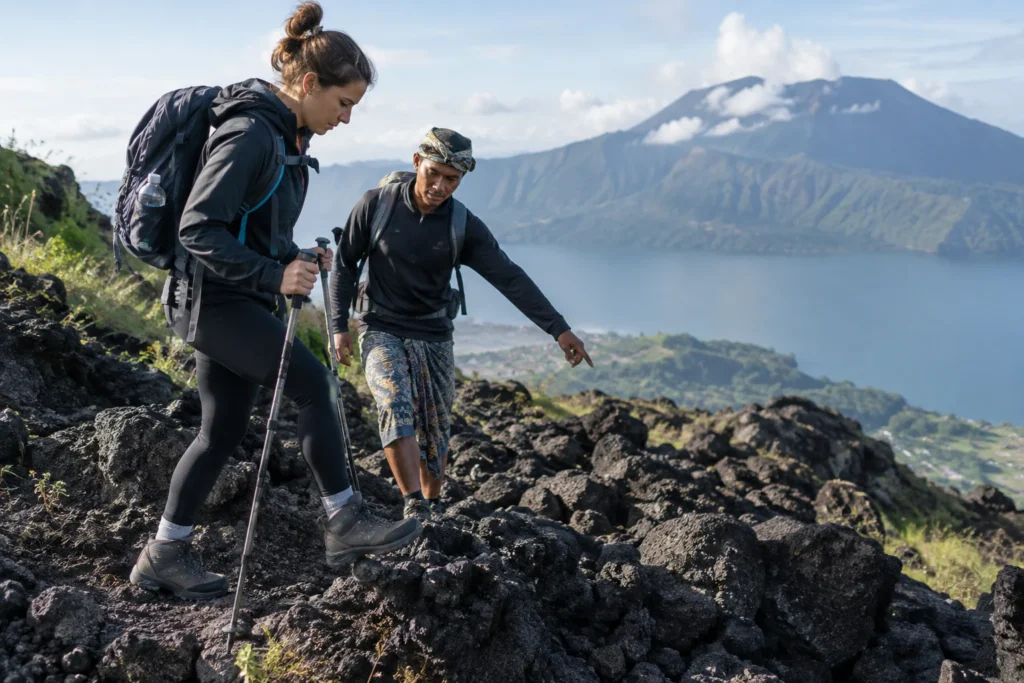
Mount Batur is often the main reason travellers come to Kintamani, but the surrounding caldera has other places worth understanding. One of them is Trunyan, a traditional village on the eastern shore of Lake Batur. Reaching it is a different experience from driving to a viewpoint: visitors generally travel across the lake by boat and should approach the village with respect for its customs and community.
This guide explains how a visit from the Mount Batur area can work, what to know about boat access, how to behave around cultural sites, and how to plan the timing. It is an orientation guide, not a promise that every visitor area or boat arrangement is available every day. Confirm local conditions and access with people in the village before setting out.
Where is Trunyan Village?
Trunyan, also written Terunyan, is a traditional Balinese village on the eastern side of Lake Batur in Kintamani, Bangli Regency. The lake sits inside the large Batur caldera, with Mount Batur and the surrounding highlands forming the wider landscape. Because the village is located along the lakeshore, the approach is commonly associated with crossing Lake Batur rather than simply driving to a roadside attraction.
The village is known for distinctive traditional customs, including a well-known burial tradition. These practices belong to the community and should not be treated as a spectacle. If you are interested in learning about them, use a respectful local guide or authorised local arrangement and follow the community’s instructions about where visitors may go and what may be photographed.
Can you visit Trunyan after a Mount Batur sunrise trek?
It may be possible to include a Trunyan visit on the same day as a Mount Batur sunrise trek, but it depends on your trekking finish time, boat availability, weather on the lake and the arrangements made locally. Do not assume that a boat will be waiting automatically after your hike. The lake visit is a separate activity that needs its own transport planning.
If you want to combine both experiences, discuss the idea before your trekking date. Ask where the boat departs, how long the crossing and visit are expected to take, whether a local guide is included, and what happens if wind or weather makes the lake crossing unsuitable. Leave a flexible schedule rather than booking a tightly timed onward activity.
How do visitors reach Trunyan?
Visitors commonly arrange a local boat crossing from the Lake Batur shoreline. The exact departure point, route, price and operating arrangements can vary, so confirm them directly with the local boat operator or your accommodation before travelling. A road journey to a lakeside point and a boat journey are two different parts of the trip; allow time for both.
- Confirm the departure point: ask for the exact lakeside meeting location rather than relying on a general map pin.
- Agree on the arrangement: confirm the return boat, expected duration, price and what is included before boarding.
- Check the weather: lake conditions can affect whether a crossing is comfortable or possible.
- Carry some cash: ask locally about accepted payment methods and any community or entrance contributions.
- Keep your schedule flexible: avoid planning an immediate airport transfer or another fixed-time activity afterwards.
What is culturally significant about Trunyan?
Trunyan is often discussed because of a distinctive local funerary tradition associated with a sacred area near the village. Descriptions online can be sensationalised or oversimplified. A more thoughtful approach is to understand that these are cultural and spiritual practices with meaning for the community, not an attraction created for visitors.
Traditions can also be more nuanced than a short travel article can explain. Customs, access rules and the way visitors are received may change. If you are curious, listen to a local explanation, ask questions politely and accept that some places or details may be private. Never assume that paying for a boat ride gives unrestricted access to every cultural or sacred location.
Visitor etiquette: how to show respect
A respectful visit begins before you arrive. Dress modestly, keep your voice low around sacred places and follow the instructions of your local host. If a guide asks you not to enter an area, take photographs or touch an object, follow that request without argument.
- Ask permission before photographing residents, ceremonies or culturally sensitive places.
- Do not touch, move or take any cultural objects or offerings.
- Stay with your local guide and use only the visitor areas they identify.
- Avoid loud behaviour, jokes or comments about funeral customs.
- Take all rubbish away and avoid leaving food, plastic or other items behind.
- Be prepared to accept that photography or access may not be permitted.
How much time should you allow?
There is no single reliable duration for every visit because the total depends on your starting point, road conditions, the boat departure location, lake conditions and the local arrangement at the village. Ask the operator for a realistic estimate that includes waiting time and the return crossing, not only the time spent on the boat.
If you are combining Trunyan with a sunrise trek, allow a generous rest period after the climb. A pre-dawn hike can be tiring, and adding another excursion immediately may make the day feel rushed. A relaxed schedule is more enjoyable and gives you time to respond if weather or transport arrangements change.
What should you bring?
Pack lightly and keep your belongings secure during the boat crossing. Conditions beside the lake may feel different from the cooler early-morning air on the mountain. Bring only what you need and protect your phone or camera from splashes.
- Drinking water and sun protection for the lakeside part of the day.
- A light rain jacket in case the weather changes.
- Modest, comfortable clothing suitable for visiting a traditional community.
- Cash for locally confirmed transport or contributions.
- A waterproof pouch for your phone and small valuables.
- Comfortable shoes that are easy to walk in around the lakeshore.
Can you visit independently?
Independent travel may be possible if you can organise transport to the correct lakeside departure point and confirm a boat arrangement directly. However, first-time visitors may find it easier to ask their accommodation or a trusted local operator to help coordinate the logistics. A local guide can also provide context that is difficult to understand from signs or online descriptions alone.
Whichever option you choose, verify the current arrangements rather than relying on old blog posts. Confirm the return journey before leaving the shore, and do not board an unofficial or unsafe boat simply because it is available.
Combining Trunyan with other Kintamani experiences
The wider Kintamani area offers several different ways to experience the caldera. Some visitors focus on the sunrise trek, while others prefer viewpoints, lakeside scenery or cultural stops. If you have limited time, choose a small number of activities and allow enough time to enjoy each one rather than trying to fit everything into a single morning.
For background on the landscape surrounding the lake, read our guide to how the Batur caldera was formed. If your main goal is the mountain itself, you can also explore our Mount Batur sunrise trekking information and review the available trekking options.
Frequently asked questions
Where is Trunyan Village in Bali?
Trunyan is a traditional village on the eastern shore of Lake Batur in the Kintamani area of Bangli Regency. Visitors commonly reach it by arranging a boat crossing on the lake.
Can I visit Trunyan after trekking Mount Batur?
It may be possible, depending on your trekking finish time, boat availability, weather and local access arrangements. Plan it as a separate excursion and confirm the details in advance.
Do I need a boat to reach Trunyan?
Visitors commonly use a local boat crossing from the Lake Batur shoreline. Confirm the current departure point and return arrangement with a local operator before travelling.
Is Trunyan Village a tourist attraction?
It is a living traditional community with cultural and spiritual practices. Visitors should treat it as a community first, follow local guidance and avoid treating sensitive customs as entertainment.
Can visitors take photos in Trunyan?
Photography rules may depend on the location and the people or activities involved. Always ask permission and follow any restrictions set by your local host or community guide.
How long does a Trunyan visit take?
There is no fixed duration. Travel time, waiting for the boat, lake conditions and the local visit arrangement all affect the schedule. Ask for an estimate that includes the return crossing.
Plan thoughtfully around Lake Batur
Trunyan offers a different perspective on the Mount Batur area: not another summit viewpoint, but an opportunity to learn about a community whose traditions are closely connected to this landscape. The best visit is one planned carefully, with realistic timing, safe local transport and respect for the people who live there.
If you are planning a sunrise experience in Kintamani, start with the Mount Batur trekking booking page and arrange any additional lake excursion separately with a trusted local provider. Confirm current access and weather conditions before you go.