
What to Wear on Mount Batur: The Complete Outfit Guide 2026
Here’s the scene I see every week: trekkers show up at the trailhead at 3 AM in flip-flops, a t-shirt, and shorts, expecting a beach-walk vibe. By the time they reach the summit at 6:15 AM, they’re shivering so badly they can barely hold their coffee cup. Then on the descent, their sandals slip on loose gravel and they spend 90 minutes regretting every life choice.
The temperature at the summit is 10–15°C, but you’re also sweaty from the climb, so wind chill hits differently. Plus the descent is harder on knees than the climb up. Get your outfit right, and the whole experience transforms. Get it wrong, and you’ll remember it for the wrong reasons. Here’s exactly what to wear — broken down layer by layer. Want the complete Mount Batur trekking package with everything included? Book now.
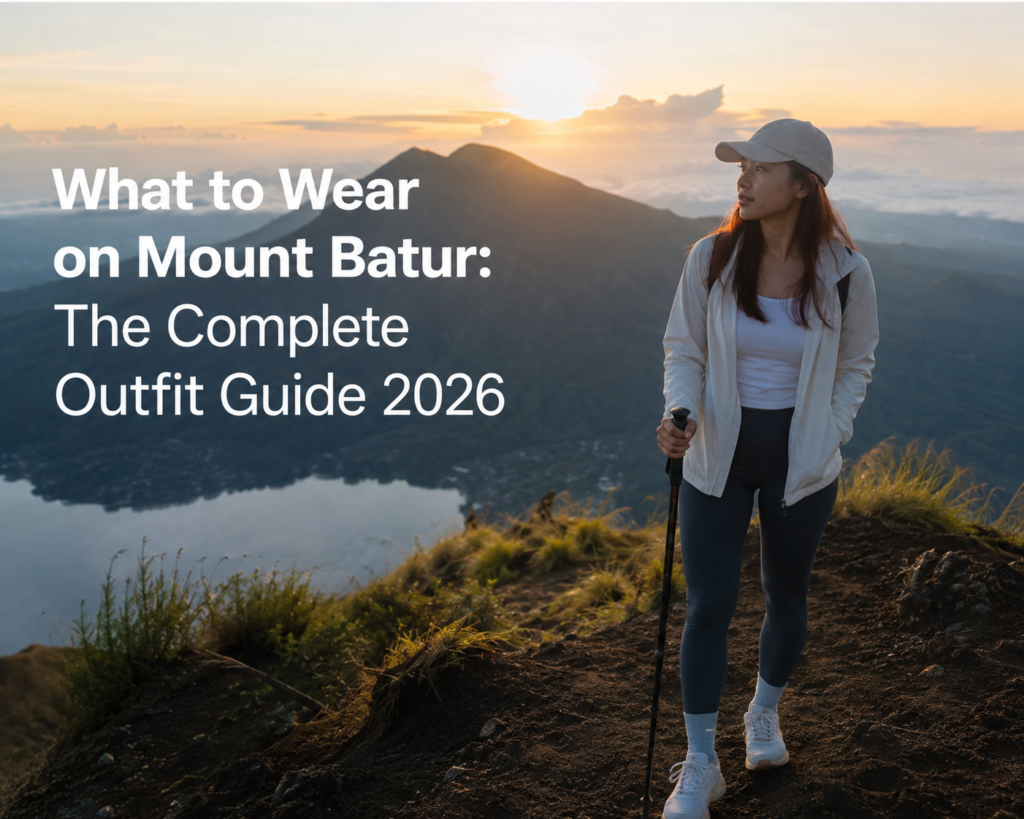
The Golden Rule: Layering
You’re going to experience three different climates in one morning:
- Hotel pickup (1:30 AM): Warm, humid (25–28°C in most of Bali)
- Trailhead (3 AM): Cool mountain air (12–15°C)
- Summit (6:15 AM): Cold with wind chill (10–15°C, feels colder when sweaty)
- Descent (7:30–9 AM): Warming up, sweaty by the time you hit the trailhead
Notice the swing: you leave a warm, humid villa and step out two hours later into crisp 12–15°C mountain air. That car ride is your changing room — most trekkers layer up before the wheels stop. Based in Ubud? You get the shortest drive in Bali; see our Mount Batur from Ubud guide for your exact pickup window so you know precisely when to be dressed and waiting.
To understand exactly when you’ll need to add or remove these layers, check the hour-by-hour breakdown in our complete Mount Batur trekking guide.
One outfit won’t cut it. You need layers you can add and remove. Here’s the system:
Base Layer (Next to Skin)
Top: Moisture-Wicking T-Shirt or Long Sleeve
What to wear: Synthetic or merino wool base layer. Cotton is acceptable if it’s all you have, but it holds sweat and makes you colder at the summit.
Why it matters: You’ll sweat during the 2-hour climb. If your base layer absorbs and holds moisture, you’ll feel clammy and cold at the summit — even if the air is warm.
Budget pick: Any polyester t-shirt from Uniqlo Dry-EX or Decathlon. Works perfectly.
Upgrade pick: Merino wool base layer (Icebreaker, Smartwool). More expensive but regulates temperature better and doesn’t smell.
Bottom: Leggings, Track Pants, or Hiking Pants
What to wear: Long pants, period. Leggings work great. Track pants work. Hiking pants work. Shorts do not work.
Why long pants: Three reasons. First, the summit is cold and wind hits bare legs hard. Second, the descent is on loose volcanic gravel that scrapes skin if you fall. Third, there are thorny bushes and sharp lava rocks on parts of the trail.
Budget pick: Any leggings or joggers. Skip the fashion — function matters more.
Upgrade pick: Lightweight hiking pants with built-in belt (Columbia, Decathlon Forclaz). Durable and quick-drying if it rains.
Mid Layer (Warmth)
Fleece or Light Puffer
This is your warmth layer for the summit. Put it on at the halfway rest stop or just before the final push.
What to wear: Light to mid-weight fleece, or a packable puffer jacket. Nothing too bulky — you’ll be climbing and don’t want to overheat.
Why it matters: This is where 90% of trekkers go wrong. They show up in a t-shirt thinking “it’s Bali” and freeze at the summit. The mid layer is what makes breakfast at 1,717m enjoyable instead of miserable.
Budget pick: Uniqlo fleece or any department store fleece jacket. IDR 200–300K range works perfectly.
Upgrade pick: Patagonia R1 or Arc’teryx Atom. Lightweight, compressible, warm even when damp.
Outer Layer (Wind + Light Rain)
Windbreaker or Light Rain Jacket
Put this on when you reach the summit or if it starts drizzling on the descent.
What to wear: Any windbreaker or light rain shell. Doesn’t need to be waterproof-rated — just wind-blocking.
Why it matters: Summit winds can drop your perceived temperature by 5–8°C. A windbreaker turns a shivering breakfast into a comfortable one. It also protects from light rain during wet season.
Budget pick: Any $10 windbreaker from a sports store. Function over fashion.
Upgrade pick: Gore-Tex shell (Arc’teryx, Marmot). More than you need for Batur, but works for all your future adventures.
Footwear: This Is Non-Negotiable
Hiking Shoes or Sturdy Sneakers
What to wear: Closed-toe hiking shoes, trail runners, or sturdy sneakers with good grip. Shoes you don’t mind getting dirty.
What NOT to wear: Flip-flops, sandals, Converse, Vans, or any fashion sneaker with flat smooth soles. These are actively dangerous on loose volcanic gravel.
Why it matters: This is the single biggest safety factor on the trek. The descent is 1.5 hours on loose gravel that slides under your feet. Proper grip keeps you upright. Also, your shoes will get dusty and scratched — don’t bring your favorite pair.
Budget pick: Any Decathlon trail running shoe or older sneakers with good tread.
Upgrade pick: Merrell Moab 3, Salomon X Ultra, or Hoka Speedgoat. Overkill for one trek, but lifetime shoes.
Socks: Don’t Skip This
What to wear: Athletic socks — synthetic or wool. No-show socks are fine. Avoid cotton dress socks.
Why it matters: Wet socks (from sweat) cause blisters over 4 hours of hiking. Athletic socks wick moisture. Wool socks are best if you have them.
Accessories That Make a Difference
Headlamp (We Provide One, But Know Why)
We provide this: LED headlamp for every trekker. Don’t rely on your phone flashlight — your hands need to be free.
Why you need it: First 90 minutes of the trek is in darkness. You need both hands free for balance on the steeper sections. A headlamp keeps your path lit while your hands stay on trekking poles.
Trekking Poles (We Provide)
We provide this: One trekking pole per person.
Why it matters: This is your knees’ best friend on the descent. The pole takes 20–30% of the impact off your joints on the loose gravel downhill. Use it religiously.
Small Backpack
What to bring: Any small daypack or drawstring bag. 10–20 liters is plenty.
Why it matters: You don’t want to carry things in your hands on steep sections. Pack everything — camera, phone, extra layer, sunscreen — in a small bag you can sling on your back.
Optional: Beanie or Light Hat
Bring if: You run cold or hate wind in your hair. Summit winds can be strong. A beanie weighs nothing and makes the summit breakfast much more pleasant.
The Complete Outfit Checklist
Here’s exactly what to pack the night before:
- ✅ Moisture-wicking base layer (t-shirt or long sleeve)
- ✅ Long pants (leggings, joggers, or hiking pants)
- ✅ Fleece or light puffer mid layer
- ✅ Windbreaker or light rain jacket
- ✅ Hiking shoes or sturdy sneakers (NOT sandals)
- ✅ Athletic socks
- ✅ Small backpack
- ✅ Phone + power bank (cold drains batteries fast)
- ✅ Optional: Beanie, sunglasses (sunrise is bright)
We provide at trailhead: headlamp, trekking pole, water, breakfast. That’s it — no hidden gear fees.
Seasonal Adjustments
Dry Season (April – October)
Follow the checklist exactly. No rain gear needed. Summit will be cold but clear.
Wet Season (November – March)
Add a waterproof rain jacket to your outer layer. Even if it doesn’t rain during the trek, morning drizzle is common. Also consider a small waterproof bag or ziplock for your phone and camera. Wet season mornings can bring light drizzle and heavier mist. If you’re unsure whether your travel dates fall into the heavy rain window, check our month-by-month weather breakdown before finalizing your gear.
What About the Hot Spring Add-On?
If you’re adding the natural hot spring visit after the trek (IDR 100K, 85% of guests do it), you’ll need:
- Swimwear (wear it under your hiking clothes or pack in your bag)
- A change of underwear (you’ll put on fresh clothes after)
- A small towel (we provide one if you book through us)
The hot springs are volcanic, mineral-rich, and feel incredible after a 2-hour descent. Pack accordingly if you’re adding it — add hot spring to your trek booking here.
Frequently Asked Questions
Can I wear a dress or skirt?
Technically yes, but I wouldn’t recommend it. Loose gravel, thorny plants, cold summit winds, and the physical exertion make pants a far better choice. Save the dress for dinner afterward.
And if the forecast shows rain on your trek morning, don’t panic — read our complete rain policy guide before you consider cancelling.
Do I need hiking boots?
No. Proper hiking boots are overkill for this trek. Sturdy sneakers or trail runners are perfect. Full boots are for multi-day treks like Rinjani or Everest Base Camp.
What about jewelry or watches?
Leave them at the hotel. Rings can slip off when hands are sweaty, watches can scratch on rocks. Nothing valuable on the mountain.
What do I do with my outfit after the trek?
Your shoes and clothes will be dusty and sweaty. Pack them in a separate bag from your clean clothes. Most hotels in Bali have laundry service — drop them off for next-day return.
I only have sandals — can I still trek?
I genuinely wouldn’t recommend it. You risk slipping on the descent, stubbing toes on lava rocks, and having a miserable experience. Buy a cheap pair of sneakers (IDR 200–300K at a local sports store) or book the Jeep Sunrise Tour instead — same views, zero hiking, any footwear works.
Final Outfit Wisdom
Dress for three different environments, not one. Base layer for sweat, mid layer for warmth, outer layer for wind. Sturdy shoes for safety. Small backpack for convenience.
Follow this guide and you’ll be comfortable the entire 6-hour experience. Skip the layers and you’ll remember the trek for how cold you were, not how incredible the sunrise was.
Pack smart, show up prepared, and enjoy one of Bali’s most iconic adventures. Book your Mount Batur sunrise trek and we’ll take care of the rest — guide, breakfast, equipment, insurance, all included.