

How Fit Do You Need to Be for Mount Batur?
One of the most common questions we hear before a Mount Batur sunrise trekking booking is surprisingly simple: “Am I actually fit enough to do this?”
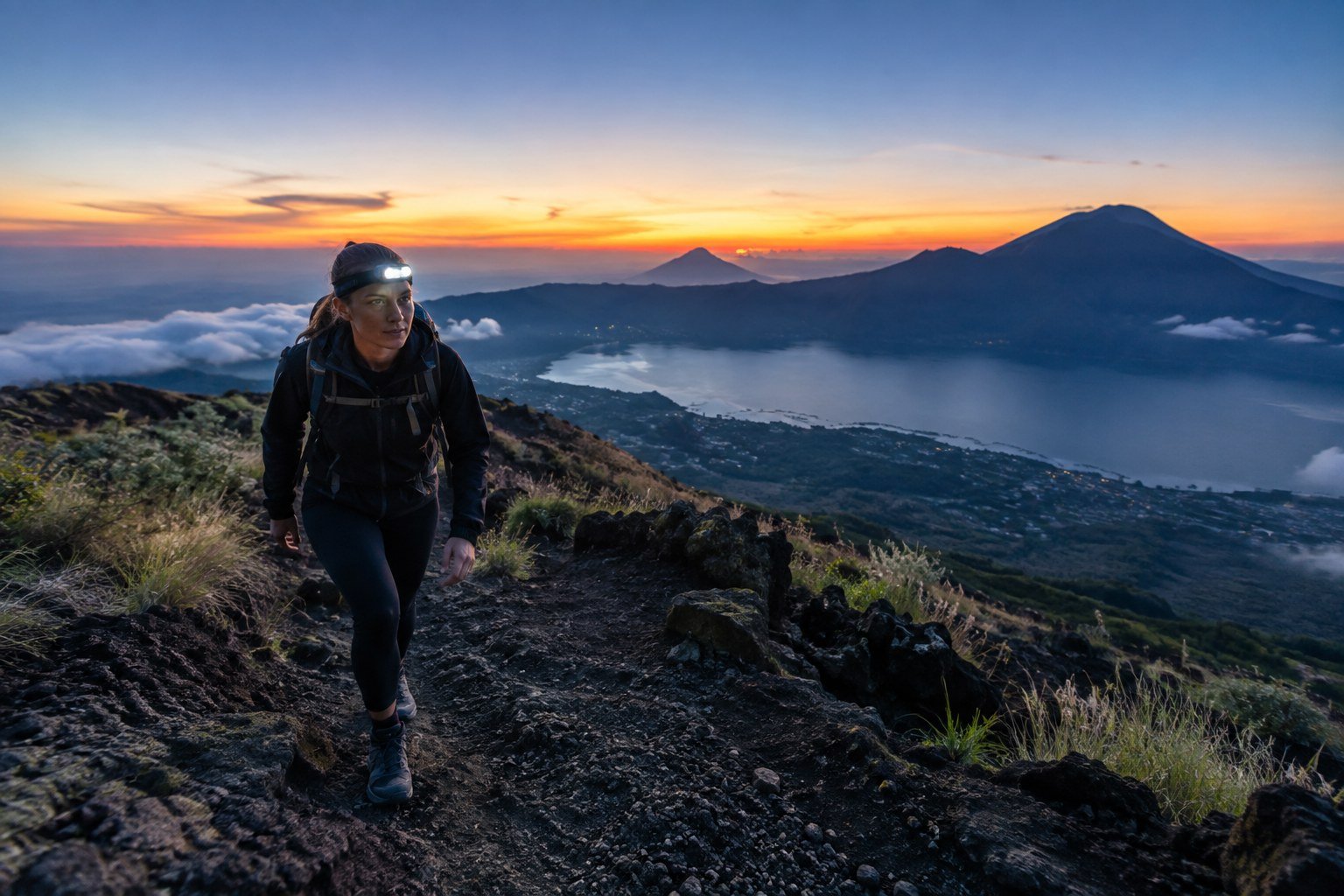
You do not need to be a marathon runner, a serious hiker, or someone who spends every weekend in the mountains. Mount Batur is a short, steep sunrise hike rather than a technical climb. The bigger challenge is the combination of an early-morning start, roughly two hours of uphill walking, uneven volcanic ground, and the temptation to rush because everyone wants to reach the summit before sunrise.
That distinction matters. A person who can comfortably walk for an hour but has never climbed a mountain can often do Batur with the right pace. Meanwhile, someone who is very fit in the gym can still find the loose volcanic gravel surprisingly tiring.
The Honest Answer: How Fit Do You Need to Be?
For most healthy adults, Mount Batur is best described as moderate fitness with a steep section. The standard sunrise route climbs from the Toya Bungkah area to a summit elevation of about 1,717 metres. The commonly used route involves several hours of total activity, with the uphill section taking roughly 1.5–2.5 hours depending on pace, stops, trail conditions, and the group.
The important part is that there is no prize for getting there first.
A good local guide should adjust the pace to the people in the group. You can take short breaks, drink water, control your breathing, and keep moving without turning the experience into a race.
The American Academy of Pediatrics also emphasizes that aerobic activities such as walking and hiking can build endurance, and that activity should be appropriate to the person’s fitness level. For people who are not currently active, gradually building activity is preferable to suddenly doing a very demanding session. American Academy of Pediatrics guidance on aerobic training is a useful general reference.
The Three Things That Actually Make Batur Hard
People often imagine the altitude is the main problem. For most visitors, it is not. The real challenge comes from three things happening at the same time.
1. The Steepness
Mount Batur is not a long expedition, but parts of the route become noticeably steeper as you get closer to the upper section. Your thighs and calves will work harder than they do during a normal walk around Ubud.
If you regularly climb stairs, walk hills, hike, cycle, swim, or play a sport, you already have a useful fitness base.
2. Loose Volcanic Ground
This is where Batur feels different from a treadmill.
Some sections contain volcanic sand, gravel, and uneven rocks. Your foot can slide slightly backward with each step, which makes the same hill feel harder than a paved staircase. On the descent, careful foot placement becomes even more important.
This is why leg control and balance can matter just as much as cardiovascular fitness.
3. The 2 AM Lifestyle Problem
Honestly, the alarm clock defeats more people than the mountain.
Depending on where you stay, your pickup may be around 1:00–2:30 AM. After the drive to Kintamani, the trek begins in the early morning darkness. You may be physically capable of climbing Batur but still feel miserable because you went to bed at midnight and expected your body to function normally at 4 AM.
If you can protect your sleep the night before, your experience can be dramatically easier.
Quick Fitness Test: Could You Probably Handle Mount Batur?
There is no official fitness test for Mount Batur, but these simple questions can give you a realistic idea of where you stand.
- Can you walk continuously for 60–90 minutes without needing a long rest?
- Can you climb several flights of stairs at a steady pace?
- Can you walk uphill while still controlling your breathing?
- Can you comfortably spend several hours on your feet?
- Do you normally recover reasonably well after a long walk or active day?
If most of those answers are yes, you may already have enough basic fitness for the trek.
If your answer to most is no, that does not automatically mean you cannot do it. It means you should prepare rather than assuming you can simply push through on the day.
You Do Not Need to Train Like a Mountain Climber
This is where many first-time hikers overcomplicate things.
You do not need a six-week boot camp. You do not need to start lifting extremely heavy weights. And you definitely do not need to run 10 kilometres every morning.
The most useful preparation is surprisingly boring: walk more, add some hills or stairs, and build consistency.
The AAP notes that people who are less fit can start with less exercise and gradually add time. That same principle makes sense for preparing for a hike: give your body repeated exposure to the type of effort it will need instead of doing one huge workout immediately before your trip.
A Simple 2–4 Week Batur Fitness Plan
If your trip is a few weeks away, you can keep the preparation simple.
Week 1: Just Start Moving
- Walk 30–45 minutes, 3–4 times during the week.
- Choose stairs instead of elevators when practical.
- Add a few short uphill sections if you have access to them.
- Keep at least one easier recovery day between harder sessions.
The goal is not exhaustion. You are teaching your legs and lungs that regular activity is normal.
Week 2: Add Hills and Stairs
- Walk 45–60 minutes, 3–4 times.
- Add 10–20 minutes of stairs or uphill walking to two sessions.
- Practice maintaining a steady pace rather than sprinting.
- Pay attention to your shoes and socks to identify any hot spots before the trip.
Week 3: Simulate the Effort
- Complete one longer 60–90 minute walk.
- Include hills or stairs where possible.
- Practice carrying the small daypack you plan to use in Bali.
- Keep other sessions moderate and comfortable.
Week 4: Do Not Try to Become a Hero
If your trek is only a few days away, do not suddenly start doing brutal workouts. Arriving in Bali with sore legs is the opposite of preparation.
Keep moving, sleep well, stay hydrated, and arrive at the trailhead feeling fresh.
What About People Who Never Exercise?
This is the more difficult question.
If you are generally sedentary, climbing Mount Batur without preparation can be uncomfortable. The issue is not that the mountain requires elite fitness; it is that your body has no recent practice dealing with sustained uphill effort.
Start with walking. Even if you only have a short amount of time before your Bali trip, regular walks are more useful than one enormous workout.
If you have a known medical condition, significant joint problems, chest symptoms with exercise, or concerns about whether strenuous activity is appropriate for you, speak with your doctor before planning the trek. General hiking advice cannot replace individualized medical advice.
What About Older Travelers?
Age alone does not tell us whether someone can climb Mount Batur.
We have seen older travelers who are regular walkers move comfortably up the trail, while younger travelers who rarely exercise can struggle. Fitness, balance, previous hiking experience, and confidence on uneven ground are much more useful factors than the number on your passport.
If you are older and active, focus on pacing and footing rather than trying to keep up with younger people in the group.
A private Batur sunrise trek can be particularly useful if you want the flexibility to stop whenever you need rather than following the pace of a larger group.
Do You Need to Be Fit for the Descent?
Absolutely—but in a different way.
Many people focus entirely on reaching the summit. Once the sunrise photos are finished, they assume the hard part is over.
Not quite.
Walking downhill over loose volcanic gravel requires concentration. Your quadriceps and knees absorb a different kind of load, and slipping is easier if you rush. Shorter steps, controlled movement, and good footwear make a big difference.
This is one reason we recommend saving some energy for the way down. Reaching the summit exhausted is not the goal. Reaching the summit and returning comfortably is.
What Shoes Should You Wear?
You do not necessarily need expensive hiking boots.
For most visitors, comfortable shoes with good traction and a secure fit are more important than brand or price. Avoid completely smooth-soled fashion sneakers, sandals that can slide around, and shoes you have never worn before.
The volcanic gravel can move under your feet, particularly on steeper sections. A shoe that feels secure on a hotel floor can behave very differently on loose mountain terrain.
And please do not bring brand-new shoes straight out of the box. A blister halfway up Mount Batur is a very memorable experience—but not the kind you want.
How Fast Should You Walk?
Slower than you think.
This is probably the most useful fitness tip on this entire page.
Many first-time hikers start too quickly because the group ahead looks fast. Ten or fifteen minutes later, they are breathing heavily and wondering why the mountain suddenly feels impossible.
Instead, use a pace where you can still control your breathing. Take shorter steps on steep sections. Stop briefly before you are completely exhausted rather than waiting until your legs are shaking.
A steady two-hour climb is usually a much better experience than trying to turn the first 30 minutes into a race.
Join Trek or Private Trek If You Are Worried About Fitness?
This is where the choice of booking format can make a real difference.
Join Trek: Best if you are reasonably confident in your fitness and are comfortable walking at a normal group pace.
Private Trek: Better if you are unsure about your fitness, travelling with mixed fitness levels, or simply want the guide to adapt the pace around your group.
Private does not make the mountain physically easier. What it changes is the pressure. You can take a short break without feeling that ten strangers are waiting for you. If one person is stronger and another needs more time, the guide can manage the group around its actual ability.
For a detailed comparison, see our Mount Batur trekking vs Jeep sunrise tour guide.
What If You Realize Halfway Up That You Are Too Tired?
Do not turn a holiday activity into a test of pride.
If you feel unusually weak, dizzy, unwell, or unsafe, tell your guide. Take a break and assess how you feel. Continuing is not mandatory simply because you paid for a summit experience.
On a private trek, the conversation is especially straightforward: the guide can slow down, stop, or discuss turning back if necessary.
The mountain will still be there. There is no sunrise photo worth ignoring a genuine health or safety problem.
What About the Jeep Option?
If the problem is not fitness but simply the idea of climbing in darkness, you do have another option.
The Mount Batur Jeep sunrise tour removes the main physical demand of the hike while still giving you the sunrise and volcanic landscape experience. It is particularly attractive for families, older travelers, mixed-ability groups, or anyone who knows they will not enjoy a steep pre-dawn hike.
You are not “cheating” by choosing the Jeep. You are choosing the experience that fits your body and your travel style.
Fitness Checklist for the Night Before
- Get to bed early rather than staying up packing.
- Eat a normal, familiar dinner.
- Prepare your clothes, shoes, phone, and small daypack before sleeping.
- Keep water ready for the journey.
- Do not experiment with a new supplement, energy drink, or unfamiliar food.
- Make sure your shoes are comfortable and already broken in.
- Tell your guide if you have concerns about your fitness or mobility.
Frequently Asked Questions About Mount Batur Fitness
Do I need to be physically fit to climb Mount Batur?
You need a reasonable level of basic endurance, but you do not need to be an athlete. The hike is short compared with a multi-day mountain trek, but the route is steep and uneven. Regular walking and some stair or hill training can help considerably.
Can a beginner climb Mount Batur?
Yes. Many first-time hikers complete Mount Batur. The key is starting slowly, wearing suitable shoes, taking breaks when needed, and following your guide’s pace rather than trying to race other hikers.
Is Mount Batur harder going up or down?
Most people feel the uphill section more in their breathing and legs. The descent can be easier cardiovascularly but requires more attention because of loose volcanic gravel and uneven footing.
Can overweight people climb Mount Batur?
Body weight by itself does not determine whether someone can complete the trek. What matters more is cardiovascular fitness, leg strength, balance, mobility, and how your body responds to sustained uphill walking. If you have concerns about your health or ability to exercise safely, get individualized medical advice before the hike.
Can I train for Mount Batur in a gym?
Yes. Incline walking, stair machines, cycling, and moderate strength work can all help. But if possible, add real outdoor walking because uneven ground requires balance and foot control that a treadmill does not fully reproduce.
What if I am fit but have never hiked before?
You may still do well. Cardiovascular fitness helps, but hiking uses your legs and balance differently from many gym workouts. A few outdoor walks with hills or stairs before Bali will make the experience more familiar.
Should I choose a private trek if I am not very fit?
It can be a better choice because the guide can adapt the pace and breaks to your group. It does not remove the physical challenge, but it removes much of the pressure to keep up with strangers.
The Bottom Line: You Need Endurance, Not Superhuman Fitness
Mount Batur looks intimidating when you see the headlamps moving up the mountain in the middle of the night. But you do not need to arrive in Bali looking like a professional climber.
If you can walk, handle stairs or hills, stay patient, and manage a few hours on your feet, you may be more prepared than you think. Start slowly, protect your sleep, wear proper shoes, and let your guide control the pace.
And if the honest answer is that hiking is not your thing, that is perfectly fine too. A sunrise from the Jeep can still give you the volcano, the caldera, the lava fields, and the experience without forcing your body through a climb it does not want.
Ready to see which option fits your fitness level? Explore our Mount Batur sunrise trekking options and choose the format that makes sense for your trip.