

Exploring the Batur Caldera by Road: Scenic Stops, Lake Views and Kintamani Travel Tips
You do not have to climb Mount Batur to appreciate the scale of the Batur caldera. A road journey through Kintamani can reveal broad views of the volcanic basin, Lake Batur, villages and cultivated hillsides. For travellers who have extra time before or after a sunrise activity, exploring the area by road offers a slower way to understand the landscape beyond a single viewpoint.
This guide is about planning a scenic drive around the Batur caldera, not a fixed tour route or a list of guaranteed attractions. Road conditions, access, parking and business opening hours can change. Use the suggestions as a flexible framework, check local directions on the day and avoid stopping where a vehicle would obstruct residents or traffic.
Understanding the Batur caldera landscape
The Batur caldera is a large volcanic landscape in the Kintamani area of Bangli, Bali. From suitable viewpoints, visitors can appreciate the contrast between the higher caldera rim, the lake below and the volcanic terrain around Mount Batur. The scenery changes as the road moves between elevated viewpoints, village areas and lakeside sections.
Rather than trying to cover every road in one outing, choose a few places that match your interests. Some travellers want wide landscape photographs; others prefer a quiet lakeside perspective, a local food stop or a closer look at village life. A flexible plan is usually more enjoyable than rushing from one pin on a map to another.
1. Start with a viewpoint along the caldera rim
The elevated areas around Kintamani provide some of the most recognisable views of the caldera. From a safe, permitted viewpoint, you may be able to see Lake Batur, Mount Batur and the surrounding slopes in one broad panorama. Visibility depends on cloud, haze, rain and the time of day, so the view can look very different from one visit to the next.
Choose an established viewing area or a business that clearly welcomes visitors. Do not stop in the middle of a narrow road or pull onto private land simply because the view looks attractive. If a viewpoint has a parking fee or minimum purchase policy, check the terms before settling in.
2. Follow the landscape towards Lake Batur
Lake Batur gives the caldera a different character from the high viewpoints. The water, shoreline and surrounding slopes create a more intimate perspective of the volcanic basin. Depending on your chosen route, you may find places to pause and look across the lake, but not every stretch of shoreline is a public recreation area.
Use recognised access points and respect signs or local instructions. Lakeside roads can be narrow, and some areas are used by residents, farmers and people working on the water. Keep parking clear of driveways and working spaces. For more context about the lake and its cultural significance, read our existing guide to Lake Batur and Pura Ulun Danu Batur.
3. Notice the villages and everyday life of Kintamani
A scenic drive is not only about dramatic landscapes. The roads also pass through communities where people live, work, worship and farm. You may see local shops, roadside produce sellers, gardens and village streets. These everyday details help explain why Kintamani is more than a photo stop on the way to a volcano.
Travel slowly through residential areas, reduce noise and ask permission before photographing people or private property. If you want to visit a particular village or cultural site, learn about local access expectations in advance. Our guide to visiting Trunyan Village from the Mount Batur area explains why respectful planning matters for community visits.
4. Make time for local food and highland produce
Kintamani’s cooler highland setting is reflected in the produce and food businesses found around the region. Depending on the season and location, visitors may encounter local fruit, vegetables, coffee and small eateries. Rather than expecting a particular crop or menu to be available everywhere, ask what is fresh and locally produced on the day.
Choose businesses that are open to the public, check prices before ordering and dispose of rubbish responsibly. If you are interested in the agricultural side of the region, our article What Grows in Kintamani? explores the highland farming landscape in more detail.
5. Consider the road conditions and travel time
Driving distances around the caldera can look short on a map, but actual travel time depends on road width, traffic, weather, roadworks and the number of stops you make. Some local roads are narrow or winding. Allow extra time, especially if you are unfamiliar with the area or travelling during a busy period.
- Use a suitable vehicle and make sure the driver is comfortable with narrow, winding roads.
- Check the route before leaving, but follow local signs and restrictions if they differ from navigation directions.
- Avoid rushing between stops or scheduling a tight connection immediately afterwards.
- Park only in designated or clearly permitted areas.
- Be especially cautious in rain, fog or low visibility.
- Keep access clear for residents, emergency vehicles and agricultural traffic.
6. What time of day is best for a caldera drive?
There is no single perfect time for every visitor. Morning can offer fresh light and cooler conditions, while later in the day the atmosphere and cloud patterns may create a different look across the lake and slopes. In mountain areas, weather can change quickly, and a clear morning does not guarantee clear views later.
If you are combining a drive with a Mount Batur sunrise trek, remember that the hike begins very early and you may be tired afterwards. Keep the rest of the day relaxed. If you are not trekking, choose a time that allows you to enjoy the stops without feeling pressured by a strict itinerary.
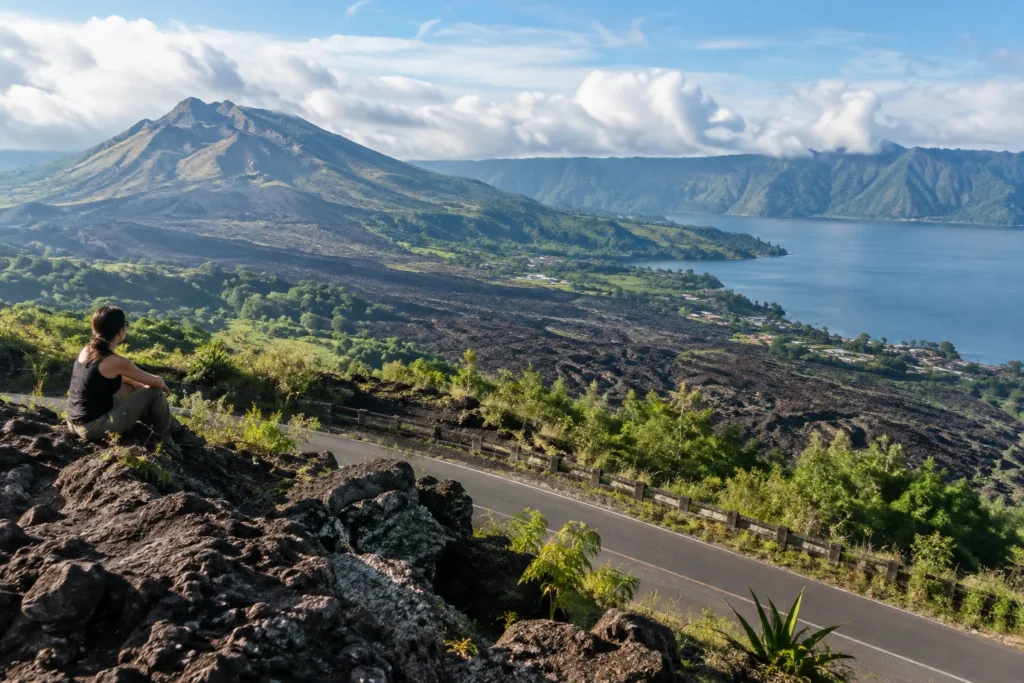
7. Photography tips for the caldera road
The caldera offers several types of photographic subject: wide landscapes from above, reflections or shoreline details near the lake, and everyday scenes in village areas. A wide-angle view can communicate the scale of the landscape, while a standard lens is useful for isolating details without getting too close to private spaces.
Prioritise safety over a photograph. Never stand in the road, lean over an unstable edge or ask a driver to stop in an unsafe location. Use established viewpoints and obtain permission before photographing residents, ceremonies or culturally sensitive places.
8. Can you explore the caldera after sunrise trekking?
Yes, a short drive through Kintamani may fit after a sunrise trek, depending on your return time, energy level and transport arrangements. It is sensible to choose one or two stops rather than planning a full circuit after an early start. Confirm with your driver which places are practical and whether any extra waiting or transport costs apply.
A scenic drive is a separate activity unless your booking explicitly says otherwise. Check what is included in your trekking package and agree on any additional route before the day. You can review the available Mount Batur trekking options and plan extra Kintamani sightseeing independently.
9. Travel responsibly around the Batur caldera
The caldera is both a remarkable natural setting and a lived-in landscape. Responsible visitors help keep it that way by supporting local businesses, respecting private property, avoiding litter and following guidance around cultural and natural sites. Do not remove rocks, plants or other natural materials, and do not enter restricted areas for a better view.
For broader background on the area’s geological importance, see the UNESCO Global Geoparks programme and the Smithsonian’s Global Volcanism Program profile for Batur. These references provide context; local access and safety instructions should always guide your visit.
Frequently asked questions about exploring the Batur caldera
Can you drive around the Batur caldera?
Visitors can explore parts of the Kintamani area by road, but there is not one simple sightseeing loop that suits every vehicle or travel plan. Choose accessible roads, check current conditions and follow local restrictions.
How long should I allow for a scenic drive in Kintamani?
It depends on your starting point, the stops you choose and road conditions. Plan a flexible half-day if you want time for viewpoints, a lakeside stop and a meal, and confirm realistic travel times locally.
Do I need a guide to explore the caldera by road?
A guide is not always necessary for a straightforward drive, but a knowledgeable local driver or guide can help with route choices, local context and suitable stopping places. Use a qualified driver familiar with the area.
Can I visit Lake Batur during the drive?
You can plan a lakeside stop where public access is available. Check the exact location and parking arrangements, and do not assume every part of the shoreline is open to visitors.
Is the caldera road suitable for every vehicle?
Road width and surface vary. Some sections may be narrow or winding, so choose a vehicle suitable for the route and use a driver who is comfortable with local conditions.
Can I combine a caldera drive with Mount Batur trekking?
It may be possible after the trek, but keep the plan flexible and account for fatigue, return time and any additional transport costs. A few relaxed stops are often better than a packed schedule.
See more than the summit
Exploring the Batur caldera by road gives you a wider view of Kintamani: the lake, the volcanic slopes, village life and the highland businesses that make the area a destination in its own right. Take your time, choose safe places to stop and let the landscape set the pace of the day.
For the sunrise experience itself, visit the Mount Batur Sunrise Trekking website and check the booking page. You can then plan a separate scenic drive around Kintamani according to your interests and current local conditions.