

Can You See the Milky Way from Mount Batur? A Practical Stargazing Guide
Mount Batur is famous for its sunrise, but the hours before dawn can offer another reason to look up: a dark sky filled with stars. If you are planning a pre-dawn trek in Bali, you may wonder whether it is possible to see the Milky Way from Mount Batur. The short answer is that it may be visible under suitable conditions, but it is never guaranteed. Moonlight, clouds, haze, the season, and light pollution all affect what you can see.
This guide explains what to expect, when stargazing may be best, how to prepare, and how to enjoy the night sky without losing sight of the main priority: a safe trek.
Can You See the Milky Way from Mount Batur?
Potentially, yes. Mount Batur rises above the surrounding landscape in Bali’s Kintamani region, and parts of the area can offer darker skies than heavily lit urban locations. On a clear, moonless night, you may be able to see a dense band of stars and, under especially favorable conditions, the Milky Way’s faint cloudy-looking band.
However, Mount Batur is not a dedicated dark-sky observatory. Nearby settlements, vehicles, tour activity, and light from other parts of Bali can affect visibility. The mountain’s weather can also change quickly. Even if a forecast looks promising, clouds may cover the sky by the time you arrive.
It is best to treat stargazing as a possible bonus to your sunrise experience rather than the central promise of the trip.
What Conditions Make the Milky Way Easier to See?
1. A dark sky with little moonlight
Moonlight can brighten the landscape and wash out faint stars. A new-moon period or nights when the moon is below the horizon for much of your viewing window are often more favorable for seeing faint details. A full moon can still be beautiful, but it is usually less suitable for spotting the Milky Way’s faint structure.
If moonlight is important to your plans, read our guide to trekking Mount Batur during a full moon. That article focuses on the effects of moonlight on the trail and the overall trekking experience, while this guide is specifically about stars and the Milky Way.
2. Clear skies and low cloud cover
Clouds are one of the biggest obstacles. A clear forecast is encouraging, but cloud conditions in the mountains can differ from those at your hotel or in another part of Bali. Haze and humidity can also reduce contrast, making faint stars harder to distinguish.
3. The right time of night and year
The Milky Way’s most noticeable region does not remain in the same position throughout the year. Visibility depends on the date, local time, and which part of the sky is above the horizon. Check a reliable astronomy app or sky chart for Bali on your intended date rather than relying on a generic “best month” claim.
Your sunrise trek begins very early, so your viewing window may be short. The sky can look impressive before dawn, but the approaching sunrise quickly brightens the horizon and makes faint stars disappear.
4. A safe place to look up
Do not leave the marked route or walk toward an exposed edge just to find a darker view. The volcanic trail can be uneven, loose, and difficult to see in low light. If you want to pause for a moment, do so only where your guide says it is safe, and keep your group together.
When Is the Best Time to Stargaze on Mount Batur?
For a typical sunrise trek, the most realistic opportunity is during the pre-dawn portion of the outing, before the sky starts to brighten. The exact window depends on the season, weather, moon position, and your route. There is no single time that guarantees the Milky Way will be visible.
Before your trip, check three things:
- Moon phase and moonrise or moonset: less moonlight during your viewing window generally helps.
- Cloud and rain forecast: clear skies are essential, while haze can still reduce visibility.
- Local sunrise time: this helps you understand how quickly the sky will brighten.
For general background on our galaxy and its place in the universe, see this NASA overview of the Milky Way. Use a current sky chart for the specific date you plan to visit, since astronomy conditions change from night to night.
What to Expect During a Sunrise Trek
Mount Batur sunrise trekking is not a dedicated astronomy tour. Most guests start in darkness and follow a guide toward a safe viewpoint for dawn. You may notice stars, but there may not be much time to stop for photography. Follow your guide’s instructions and never stop in a narrow or steep section of the path.
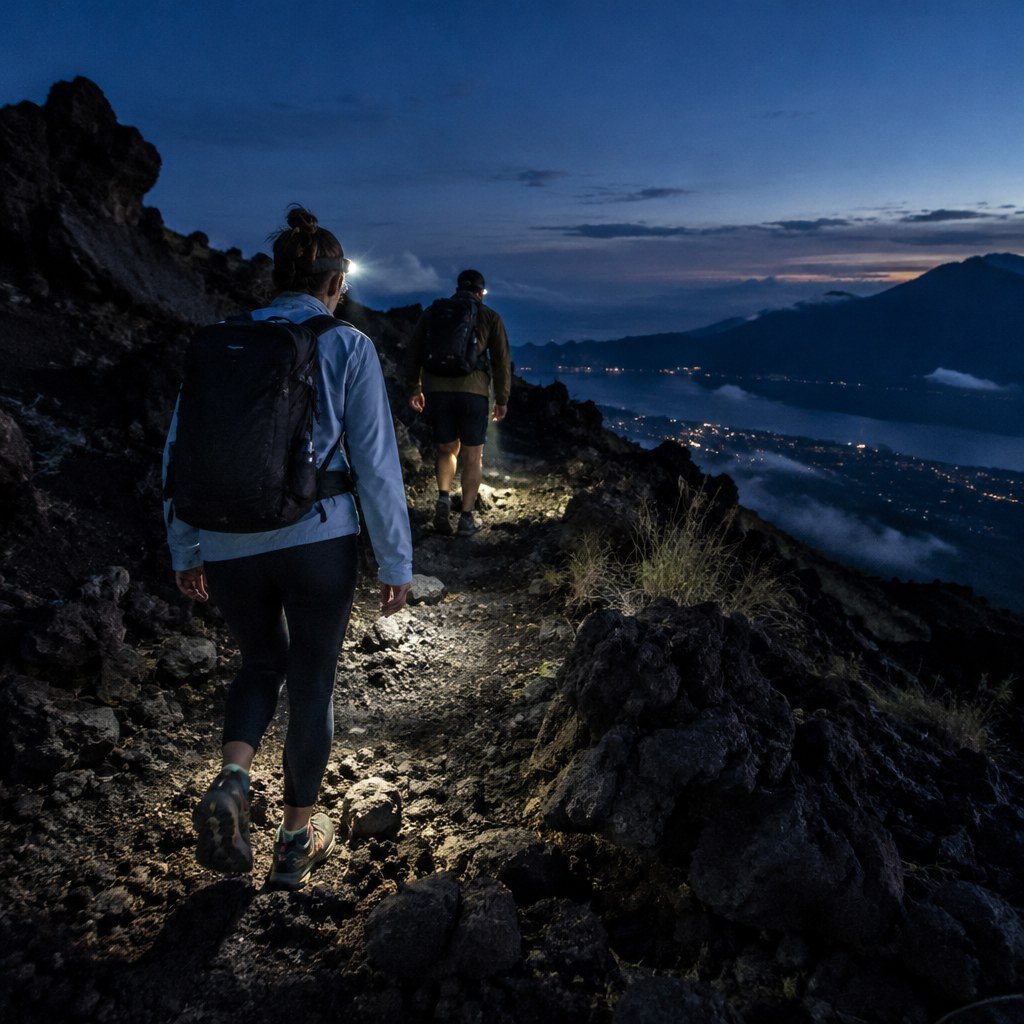
How to Photograph the Stars on Mount Batur
Capturing stars is more difficult than photographing the sunrise because the scene is dark and your camera needs to gather more light. A modern phone may record brighter stars than your eyes can easily see, but results vary by device and conditions.
- Use night mode or manual controls: if your phone supports a long exposure, experiment before your trip so you are not learning everything on the mountain.
- Keep the camera steady: a small tripod can help if you can carry it safely and your guide allows you to stop in a suitable place.
- Lower screen brightness: a bright screen can affect your night vision and disturb nearby trekkers.
- Avoid using a flash: it will not illuminate distant stars and may distract other people.
- Take a few test shots: check focus and exposure without delaying your group.
For sunrise photography, the approach is different: the sky becomes brighter, the horizon provides a natural focal point, and silhouettes can be easier to capture. Our Mount Batur sunrise photography guide covers practical camera tips and safe viewpoints.
What Should You Bring?
A few practical items will make your early start more comfortable:
- A warm layer, because it can feel cold while waiting before sunrise.
- Closed-toe shoes with reliable grip for the volcanic trail.
- A small daypack and drinking water.
- A phone or camera with enough battery for the early morning.
- A headlamp or flashlight, following your tour operator’s instructions.
Keep your hands free when walking over rough ground, and put photography equipment away while climbing. Do not look at your phone while moving along the trail. If you are unsure what clothing is suitable, see our guide to Mount Batur’s pre-sunrise temperature and what to wear.
Can You See the Milky Way Every Night?
No. Clear skies, low moonlight, and favorable timing improve your chances, but none of them guarantees a view. Cloud cover can arrive unexpectedly, and atmospheric haze or local lighting may hide faint details. The Milky Way may also be in a less favorable position during your particular viewing window.
Online long-exposure photos may show more stars and color than you can see with the naked eye.
Is a Mount Batur Sunrise Trek Worth It if the Stars Are Hidden?
It can still be a memorable experience. The trek offers the chance to watch the landscape change from darkness to dawn, see the volcanic terrain, and take in views across the surrounding caldera when conditions allow. The sky is only one part of the outing, and sunrise visibility itself is also weather-dependent.
If you want to compare options and plan the experience around your schedule, you can explore our Mount Batur sunrise trekking experiences. Choose a reputable operator, follow your guide’s safety instructions, and keep expectations flexible. A clear starry sky is wonderful, but the mountain is best enjoyed without treating any particular view as guaranteed.
Frequently Asked Questions
Is the Milky Way visible to the naked eye from Mount Batur?
It may be visible under dark, clear conditions, especially when moonlight is limited. Light pollution, haze, clouds, and the Milky Way’s position can make it faint or invisible.
Is a new moon the best time to see the Milky Way?
A new-moon period often provides darker skies, but the moon phase alone is not enough. You also need clear weather and a viewing window when the relevant part of the Milky Way is above the horizon.
Can I stop on the trail to take star photos?
Only stop where your guide confirms it is safe and does not block other trekkers. Never leave the route or approach an edge to get a better photograph.
Do I need a professional camera?
No. A phone with a night mode can capture some stars, although a camera with manual exposure controls may offer more flexibility. Keep expectations realistic and prioritize safe movement.
Will the Milky Way be visible during my Mount Batur sunrise tour?
There is no way to guarantee it. Check the moon and weather forecast close to your date, but remember that mountain conditions can change quickly.
Final Tips
To improve your chances of seeing the Milky Way from Mount Batur, plan around a dark, clear pre-dawn sky, check the moon and astronomy forecast for your date, and bring only equipment you can carry safely. Most importantly, treat the stars as a bonus rather than a promise. A safe trek and a memorable sunrise are worthwhile goals even when the night sky does not cooperate.