
Can You Trek Mount Batur During a Full Moon? What to Expect
Mount Batur is usually visited in the dark, long before the sun appears above Bali. If your trek falls near a full moon, you may wonder whether the extra moonlight makes the climb easier, creates better views, or changes the sunrise experience. The short answer is: a bright moon can make parts of the landscape easier to see, but it does not replace a headlamp, guarantee clear skies, or determine whether the sunrise will be spectacular.
This guide explains what a full moon can mean for a Mount Batur sunrise trek, what you may see on the trail, and how to plan realistically without choosing your date based on the moon alone.
Can You Trek Mount Batur During a Full Moon?
Yes. A full moon does not normally prevent people from joining a Mount Batur sunrise trek. The activity takes place before dawn, so all participants should expect to walk in darkness or low light for at least part of the route. The moon may brighten open areas when it is above the horizon and the sky is clear, but the trail can still have uneven ground, loose volcanic gravel, and darker sections.
Conditions change from night to night. Cloud cover can hide the moon completely, while trees, ridges, and the shape of the terrain can block its light even when the moon is bright. Treat moonlight as a bonus rather than a safety measure.
Does a Full Moon Make the Trail Easier?
Sometimes, but only in a limited way. Under a clear sky, moonlight can make the surrounding landscape and distant silhouettes easier to distinguish. It may help you notice the outline of the caldera or nearby hills while you pause on open ground. However, it is not strong or consistent enough to light every step safely.
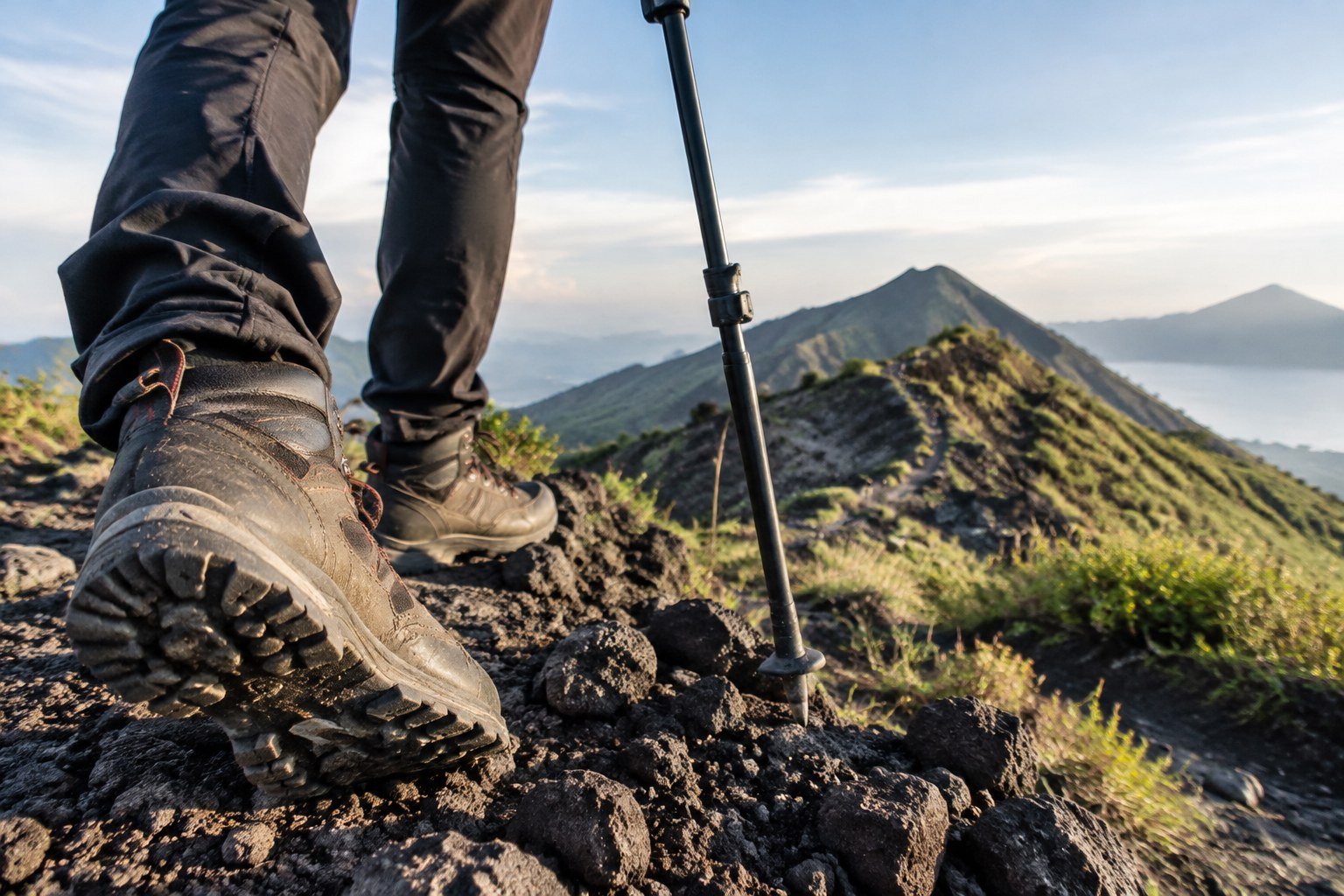
On the trail, you still need to see where you place your feet. Rocky sections, loose gravel, and changes in slope can be difficult to judge in dim light. Use the headlamp provided by your operator or bring a reliable one if your booking instructions recommend it. Keep your hands free when possible, follow your guide, and avoid stepping off the established route to take a photo.
Moonlight can also create misleading shadows. A surface that looks flat from a distance may be uneven when you get closer. Walk at a comfortable pace instead of trying to move faster because the trail seems brighter.
Will a Full Moon Affect the Sunrise View?
The moon and the sunrise are separate parts of the experience. A full moon may be visible during the earlier part of the climb, depending on the moon’s position and the time of year. As dawn approaches, the sky becomes brighter and the moon may fade from view or set below the horizon. Whether you can see both the moon and the sunrise depends on timing, direction, cloud cover, and the local horizon.
A full moon does not make the sun rise earlier or guarantee a more colorful sky. Sunrise colors depend on atmospheric conditions, clouds, haze, and the position of the sun. Some mornings produce vivid orange and pink tones; others are pale, cloudy, or partly obscured. That variation is part of mountain weather, not a sign that you chose the wrong lunar date.
If the sunrise itself is your priority, use the practical advice in our guide to the best time to trek Mount Batur rather than planning around moon phase alone.
Is a Full Moon Better for Photography?
It can create an interesting atmosphere, particularly if you enjoy silhouettes, layered ridgelines, or wide views of the caldera before dawn. Moonlight may help reveal more detail in the landscape than a moonless night, but phone cameras can still struggle in low light. Long exposures may show more detail, yet they are difficult to use while standing on an uneven trail or in a crowded viewpoint.
Keep photography stops short and stay clear of the walking line. Do not shine a bright phone light into another hiker’s eyes, and avoid backing up without checking the ground behind you. At the summit or a designated stopping area, brace your phone or camera against a stable surface if it is safe to do so. For more practical advice, read our Mount Batur sunrise photography tips.
Remember that a full moon can also make the sky brighter, which may reduce the visibility of faint stars. If your main goal is astrophotography, a darker moon phase is often more suitable than a full moon. For a sunrise trek, though, the overall experience matters more than getting one particular type of night-sky photo.
Full Moon, New Moon, or Another Date: Which Is Best?
There is no single lunar phase that is best for every visitor. A full moon offers more natural light when it is above the horizon, while a new moon creates darker skies that may be better for seeing faint stars. Between these phases, the amount of moonlight changes gradually, and the moon’s rise and set times also shift.
For general planning, the NASA explanation of the Moon’s phases is a useful, non-commercial reference. It explains why the Moon appears to change shape throughout its cycle. For your actual trek, however, check the local forecast and follow your operator’s latest instructions; a moon calendar cannot predict cloud cover at the mountain.
If you are visiting Bali for only a few days, it is rarely worth rearranging an entire itinerary just to match a particular moon phase. Choose a date that fits your travel schedule, then prepare for variable conditions.
What Matters More Than the Moon Phase?
- Weather: Cloud, rain, wind, and visibility usually have a bigger effect on the experience than the amount of moonlight.
- Footwear: Wear shoes with secure grip and a comfortable fit. Slippery or loose footwear can make uneven ground harder to manage.
- Lighting: Use a headlamp or flashlight for the dark sections, even if the moon looks bright at the start.
- Layers: The air can feel cold before sunrise, especially when there is wind. Bring a light jacket or warm layer you can remove later.
- Pace: Follow your guide’s instructions and take breaks when needed. Do not rush to reach a viewpoint before dawn.
- Visibility expectations: The moon, stars, mountain silhouettes, and sunrise can all be affected by clouds and haze.
Our article on Mount Batur temperatures before sunrise explains why a warm layer can be useful even in Bali’s tropical climate. You can also review our Mount Batur sunrise packing advice for a practical checklist of items to prepare.
Will the Full Moon Make Mount Batur More Crowded?
Not necessarily. Crowd levels depend on the day of the week, season, holidays, tour schedules, and how many groups arrive around the same time. A full moon may interest some photographers and sky-watchers, but it does not automatically mean the trail will be busier.
If you prefer a quieter experience, consider your travel dates and expectations rather than relying on lunar timing. Our guide to how crowded Mount Batur sunrise trekking can be covers the typical flow of visitors and what you may encounter at popular viewpoints.
Should You Choose a Full-Moon Trek?
Choose a full-moon date if it fits your itinerary and you like the idea of seeing the mountain under natural night light. It can add atmosphere to the early part of the walk, especially when the sky is clear. But do not book solely because you expect a bright trail or a perfect photograph.
If you are a first-time hiker, prioritize a suitable pace, clear pickup instructions, proper footwear, and a guide who explains the route. If you are mainly interested in stars, consider whether a darker night better suits your goals. If the sunrise is what you want most, focus on the forecast and a realistic understanding that mountain views are never guaranteed.
Plan Your Mount Batur Sunrise Experience
The best date is usually the one that fits your Bali itinerary and allows you to prepare properly. Moon phase can add a little character to the night, but safe lighting, trail conditions, weather, and realistic expectations matter more.
If you are ready to compare options, explore our Mount Batur sunrise trekking options and choose an experience that suits your travel plans. Check the pickup details and activity information before your date, and follow the latest guidance from your operator so you can focus on the climb and the changing sky.