
Can You See Mount Agung from Mount Batur at Sunrise? Views, Weather & Tips
Yes, you can see Mount Agung from Mount Batur on a clear morning. The higher volcano often appears as a dramatic silhouette beyond the Batur caldera, especially when the sky is open and the distant ridgelines are not hidden by cloud or haze. Indonesia’s official tourism website describes Mount Agung as one of the distant silhouettes visible from the Mount Batur summit, alongside the wider panorama of the caldera.
That said, the view is never guaranteed. You might get a crisp outline, a soft shape behind layers of cloud, or no view of Agung at all. This guide explains where to look, why visibility changes, which conditions tend to help, and how to prepare your camera without spending the whole sunrise staring at a screen.
Can you really see Mount Agung from Mount Batur?
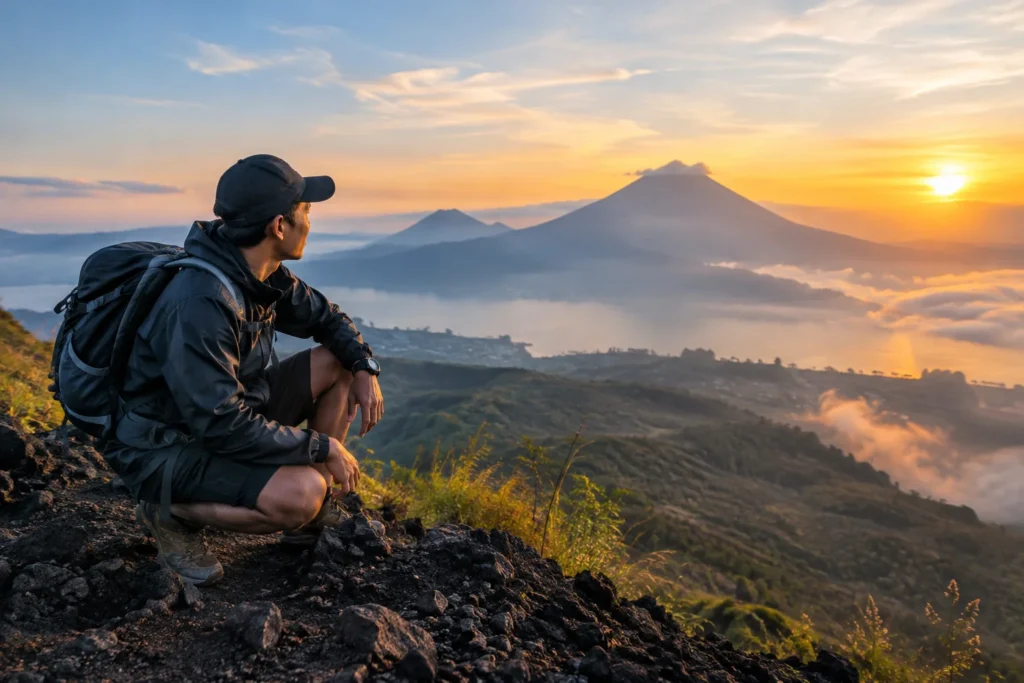
Yes. Mount Batur and Mount Agung are two separate volcanoes in Bali, and on a clear day Mount Agung can be seen rising beyond the landscape from viewpoints around the Batur summit and Kintamani highlands. It is a memorable part of the panorama: the nearer volcanic terrain gives the foreground its texture, while Agung forms a much larger, distant mountain profile.
The official Indonesia Travel guide to Kintamani specifically notes that visitors at Mount Batur can see the silhouette of Mount Agung in the distance. It also describes Mount Rinjani as potentially visible on exceptionally clear days. Treat that as a possibility rather than a promise: atmospheric conditions can change quickly in the highlands.
Mount Agung is much higher than Mount Batur, so its outline can stand out above lower ridges when the air is clear. The contrast is especially attractive around dawn, when the sky gradually brightens and the mountain’s shape becomes easier to distinguish. Sometimes the peak looks sharp and defined; at other times it appears as a faint blue-grey form. Both are normal mountain-view conditions, not a sign that you have reached the wrong place.
Where should you look for Mount Agung?
When you reach a Mount Batur sunrise viewpoint, do not assume that the first open patch of sky is the only direction worth checking. The summit area has uneven volcanic ground, small changes in elevation, and different places where groups pause for breakfast or photographs. Your guide can help point out the surrounding peaks and explain which silhouette is Mount Agung.
Look beyond the nearer caldera ridges rather than focusing only on the crater immediately around you. Mount Agung is the larger distant profile. On a clear morning, its shape is easier to separate from the background; when cloud sits across the middle distance, the mountain may appear to float above a white layer or disappear behind it.
There is no need to walk towards an exposed edge or leave the agreed viewpoint to get a better photograph. Volcanic ground can be loose, uneven, and dark before sunrise. Stay with your guide and use the safe viewing area. A slightly less dramatic camera angle is a very good trade for secure footing.
Summit trekking viewpoints
The summit area offers a broad view across the caldera and surrounding highlands. The exact composition depends on where your group stops, the route used, the position of other trekkers, and the cloud cover at that moment. If Mount Agung is visible, take a moment to identify it before framing your shot. It is easy to mistake a nearer ridge for the distant volcano when everything is still blue in the pre-sunrise light.
For more context about the difference between the two volcanoes, read our Mount Batur vs Mount Agung comparison. That article looks at the mountains as hiking destinations; this guide is about the view of Agung from Batur.
Kintamani viewpoints without the summit hike
You do not have to climb Mount Batur to enjoy views of the surrounding volcanic landscape. The Kintamani caldera rim has roadside viewpoints and cafés, including the Penelokan area, where visitors can look across Mount Batur and Lake Batur. These viewpoints are useful if you want a relaxed scenic stop or are travelling with someone who does not plan to trek.
However, a roadside viewpoint and the Mount Batur summit are not identical experiences. The summit puts you inside the volcanic landscape, while the caldera rim gives you a wider perspective across it. Which one is better depends on the view you want and how much walking you are prepared to do.
Why Mount Agung is sometimes clear and sometimes hidden
Mountain visibility depends on more than whether the forecast says “sunny”. A clear patch directly above your hotel does not guarantee a clear view across several layers of highland terrain. Cloud, mist, humidity, rain, wind, and the amount of dust or haze in the air can all affect how sharply a distant mountain appears.
Low cloud and mist
Cloud can form in the valleys and around the caldera, sometimes creating a sea-of-clouds effect. This can make the sunrise beautiful, but it may also cover the lower slopes of Mount Agung or hide the entire mountain. The view can change during the time you are at the summit: a ridge may appear for a few minutes, disappear behind moving cloud, and become visible again as the morning warms.
Kintamani is known for cool highland conditions and occasional mist. Our guide to why Kintamani gets misty and how fog affects visibility explains why the landscape can look very different from one morning to the next.
Rain and the wet season
Rain can leave the air looking fresh after a shower, but active rain clouds and thick moisture often reduce the distance you can see. During wetter periods, the sky may be clear in one direction and covered in another. This is why a general Bali weather forecast is not enough to predict whether Mount Agung will be visible from the Batur summit.
If you are travelling in the rainy season, keep expectations flexible. You can still enjoy the volcanic landscape, the changing light, and the experience of being on the mountain even if the distant peak stays hidden. For practical planning, see our Mount Batur rainy-season trekking guide.
Haze and atmospheric distance
Mount Agung is a distant subject, so even a small amount of haze can soften its outline. This is sometimes mistaken for cloud, although the effect can be more like a pale veil between you and the mountain. The nearer landscape may still look sharp while the distant peak appears faded. Photographers call this atmospheric perspective: distant objects lose contrast and detail as light passes through more of the atmosphere.
For this reason, a morning can feel pleasant and bright while the far horizon remains washed out. The best views usually happen when the air is relatively clear and there is a clean gap between the mountain and the surrounding cloud.
When is the best time of year to see Mount Agung from Mount Batur?
Clearer conditions are generally more likely during Bali’s drier months, but no month can guarantee a view. Indonesia Travel highlights May to September as a favourable period for clearer Kintamani panoramas and recommends July and August for sunrise visitors because conditions are often more stable for hiking. This is useful seasonal guidance, not a forecast for a particular morning.
The wet season can still produce excellent windows of visibility. A shower the previous day does not automatically mean the next sunrise will be cloudy, just as a dry-season date does not guarantee a perfectly clear horizon. Local weather patterns, cloud development, and visibility can vary from day to day.
Check the BMKG Kintamani weather forecast close to your activity date. It is a useful official source for local conditions, but remember that a village-level forecast cannot promise what the view will look like from a specific summit viewpoint before dawn.
What time should you reach the viewpoint?
The reason people start the Mount Batur trek in the early hours is to reach the viewpoint around sunrise. Arriving before first light gives you time to settle, let your eyes adjust, and watch the landscape change from dark silhouettes to visible ridges and valleys. Mount Agung may be visible before the sun rises, but the outline often becomes easier to recognise as the sky brightens.
Do not rush away as soon as the sun appears. If cloud is moving across the caldera, the view may improve after sunrise. Give yourself a little time to look around, enjoy breakfast if it is included in your package, and take photographs in different light. The best moment for the distant mountain may happen a little before or after the exact sunrise time.
For details about the activity schedule, read what time Mount Batur sunrise trekking starts. Your actual pickup and hiking times depend on your accommodation, package, and the operator’s confirmed plan.
Photography tips for capturing Mount Agung
You do not need professional camera equipment to photograph Mount Agung from Mount Batur. A phone can capture a recognisable silhouette when the visibility is good. The main challenge is balancing the brightening sky with a darker mountain profile and avoiding a blurry image in low light.
Use the mountain as part of a wider composition
Try a wide photograph that includes Mount Agung, the nearer caldera landscape, and some foreground detail. A distant mountain on its own can look small in a phone photograph. Including the volcanic ridges gives the viewer a sense of scale and shows where you are standing.
Use optical zoom carefully
If your phone has a genuine optical telephoto lens, use it to bring the distant peak closer. Digital zoom can make the image look soft, especially in low light. Take one wide photograph first, then try a closer frame so you have both the landscape and the mountain detail.
Keep the lens clean and the phone steady
Early-morning moisture, fingerprints, and dust can create a hazy image even when the real view is clear. Wipe the lens with a clean cloth before taking pictures. Hold the phone with both hands, lean against a stable surface if appropriate, and take several frames rather than relying on one shot.
Do not watch the whole sunrise through your screen
Take a few photographs, then put the phone away for a moment. The light changes quickly, but so does the atmosphere of the mountain. You came all this way to see the landscape, not to spend the entire morning checking whether the camera has focused on the correct cloud.
For more detailed camera and phone advice, use our Mount Batur sunrise photography tips.
What if Mount Agung is not visible?
It is disappointing when a distant peak is hidden, especially if you have imagined the photograph for weeks. But a Mount Batur sunrise trek is not a single-mountain viewing guarantee. The experience includes the trail, the volcanic terrain, the caldera, Lake Batur, changing cloud formations, and the sunrise itself.
Sometimes the clouds create a layered landscape that is just as memorable as a perfectly clear horizon. On other mornings, the sky may be bright but the far view remains muted. Neither outcome means the trip has failed. Weather is part of being outdoors, and mountain conditions cannot be controlled by a booking confirmation.
A responsible operator should explain that visibility depends on conditions and should never promise that Mount Agung will definitely appear. If seeing the distant mountain is your main priority, tell your guide. They can help you identify the best available viewing direction from the safe area, but they cannot move the clouds out of the way.
Is a Mount Batur sunrise trek still worth it for the view?
For many visitors, yes. The Mount Batur summit offers a distinctive view of Bali’s volcanic highlands, and Mount Agung is an impressive bonus when conditions allow. Even without a clear view of Agung, you can still experience the sunrise over the caldera and see the landscape gradually emerge from darkness.
If you are deciding between a trek and a vehicle-based experience, compare what each activity involves rather than choosing only by the promise of a photograph. Trekking means walking uphill in the dark with a local guide. A Jeep sunrise tour offers a different way to explore the volcanic landscape and may suit visitors who do not want the climb. You can explore the available options on our Mount Batur sunrise experiences homepage.
Planning your Mount Batur sunrise experience
Choose a date that works for your Bali itinerary, check the local forecast close to departure, and prepare for cool conditions before dawn. Wear shoes with grip, bring a warm layer, and keep your camera or phone protected from moisture. Most importantly, treat Mount Agung visibility as a possibility rather than a guaranteed feature of the tour.
If you are ready to arrange your activity, visit the Mount Batur trekking and Jeep booking page to review the available options. You can also read the Mount Batur Sunrise Trekking price guide if you want to compare Join/Share and Private trekking rates before choosing.
Frequently asked questions
Can you see Mount Agung from the Mount Batur summit?
Yes. Mount Agung is visible from the Mount Batur summit on clear mornings. Cloud, mist, haze, and weather conditions can hide it, so the view is not guaranteed.
Is Mount Agung visible during sunrise?
It can be. The mountain may appear as a distant silhouette before sunrise and become easier to recognise as the sky brightens. Visibility depends on the conditions that morning.
What is the best month to see Mount Agung from Mount Batur?
May to September is generally a favourable period for clearer Kintamani panoramas, with July and August often recommended for sunrise visits. Individual mornings can still be cloudy or hazy.
Can you see Mount Rinjani from Mount Batur too?
On exceptionally clear days, Mount Rinjani in Lombok may be visible in the distance. It is much less reliable than the nearer landscape, so treat it as an occasional bonus rather than an expectation.
Can I see Mount Agung from Kintamani without trekking?
Yes. Some viewpoints along the Kintamani caldera rim offer broad mountain panoramas without a summit hike. The perspective is different from standing on Mount Batur itself.
Does a clear weather forecast guarantee the view?
No. A general forecast cannot guarantee visibility at a particular viewpoint before dawn. Check local conditions, but be prepared for cloud or haze to change the panorama.
Should I bring a camera or is a phone enough?
A phone is enough for most visitors, especially when the mountain is clearly visible. Use a steady grip, clean the lens, avoid excessive digital zoom, and take both wide and closer photographs.
Enjoy the view, whatever the sky decides
Seeing Mount Agung rise beyond the Batur landscape is one of the special moments a clear sunrise can offer. But the real value of the morning is the whole mountain experience: the quiet start, the volcanic trail, the first light across the caldera, and the changing scenery around you. If Agung appears, enjoy the view. If it stays behind the clouds, you still have a sunrise worth remembering.