

Batur Geopark Museum: What to See, How to Visit and Why It Matters
Most visitors come to Kintamani with one picture in mind: Mount Batur rising above Lake Batur, preferably with a sunrise that looks as if somebody has carefully arranged the clouds for a travel magazine. It is a wonderful view. But there is another place in the area that can make the landscape much more interesting: the Batur Geopark Museum.
If you have ever looked across the caldera and wondered why the lake sits where it does, why the surrounding walls form such a dramatic bowl, or what happened to create the black volcanic ground, a museum visit can turn those questions into a much richer understanding of the region. It is also a useful stop for travellers who want a slower Kintamani day rather than another race from one photo spot to the next.
This guide explains what the Batur Geopark Museum is, what you can learn there, how to fit it into a Kintamani itinerary, and what to check before visiting. It is not a substitute for current opening information from the museum, but it will help you decide whether the stop deserves a place in your Bali plans.
What Is the Batur Geopark Museum?
The Batur Geopark Museum is an educational visitor attraction in the Kintamani highlands of Bangli, Bali. It introduces the natural and cultural heritage of the Batur area, with a particular focus on its volcanic landscape. The museum is associated with the wider Batur UNESCO Global Geopark, a landscape recognised for the way geology, biodiversity and local culture come together.
The museum is more than a room of rocks with labels. Its purpose is to help visitors understand the landscape as a connected story: volcanic activity shaped the land; the land influenced water, soils and habitats; and communities developed livelihoods, traditions and settlements within that environment. Once you see Kintamani through that lens, the view from Penelokan becomes a lot more than a pretty background for lunch.
The museum was developed from the earlier Batur Volcano Museum. Indonesia’s Ministry of Energy and Mineral Resources describes the Geopark Museum as an information centre for the Batur Geopark and Indonesia’s national geoparks, with conservation and sustainable development among its aims. You can read the ministry’s background at the Ministry of Energy and Mineral Resources’ museum announcement.
Why Is the Museum Worth Visiting?
It gives context to the caldera view
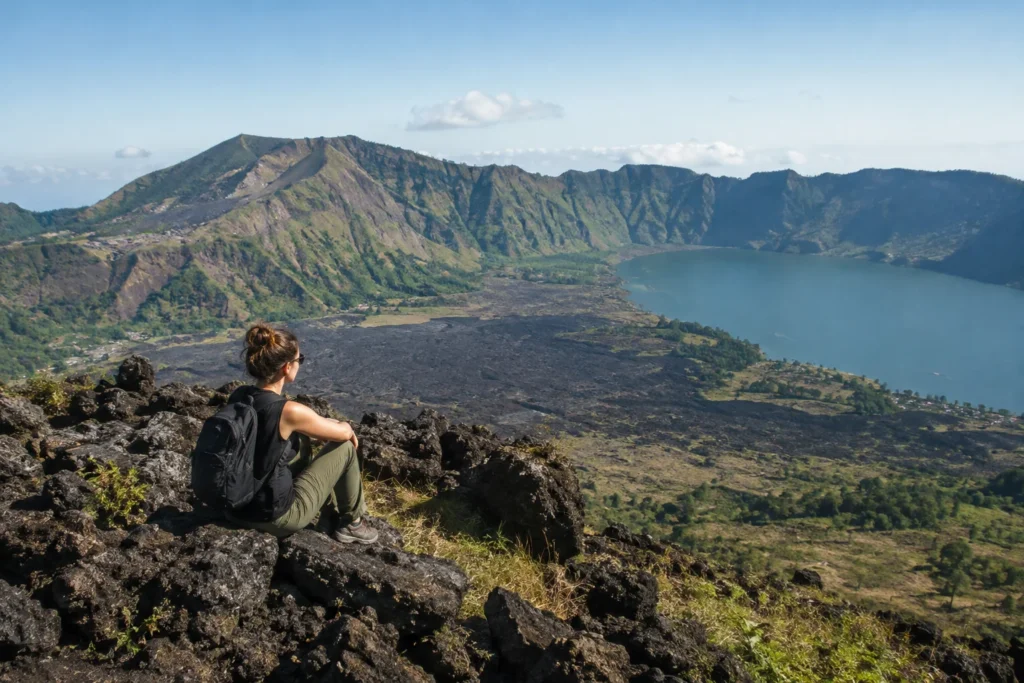
From Kintamani’s rim viewpoints, the Batur landscape can look almost unreal: a broad volcanic basin, a lake, dark lava areas and a cone rising from the caldera floor. Without context, it is easy to admire the scenery and move on. The museum helps explain the geological processes behind that scenery, so the landscape becomes easier to read.
The Batur area is notable for its nested caldera setting. In simple terms, a caldera is a large depression formed when a volcanic system loses support after a major eruption and part of the ground collapses. The Batur landscape includes an older outer caldera and a younger inner caldera. Mount Batur and Lake Batur sit within this wider volcanic setting. The UNESCO profile of Batur UNESCO Global Geopark describes this distinctive combination of calderas, volcano, lake and geothermal features.
It connects geology with everyday life
Geology can sound like a subject reserved for people who own hiking boots with suspiciously clean soles and enjoy saying words such as “pyroclastic” over breakfast. In Kintamani, however, the connection is practical. Volcanic landforms influence the shape of the region, while soils, water, elevation and climate help shape agriculture and settlement patterns.
The wider geopark includes villages where farming and tourism support local livelihoods. Kintamani is known for agricultural products such as citrus and coffee, while the lake and surrounding landscape are part of the region’s cultural identity. Learning about the geology gives visitors a better understanding of why communities live and work where they do, rather than treating the area as an empty scenic backdrop.
It makes a good alternative to an activity-heavy day
Not every Bali holiday needs a 2 a.m. alarm, a steep trail and a heroic negotiation with your own knees. A museum visit is a more relaxed way to explore Kintamani. It can suit travellers who are interested in nature, families looking for an educational stop, visitors who have already completed a Mount Batur trek, or anyone who wants to understand the area before exploring it further.
It is also a sensible option when cloud or rain makes long-distance views less impressive. A museum does not depend on a clear horizon in the same way a viewpoint does. You can still learn something about the landscape even when the mountain decides to wear its cloud blanket.
What Can You See and Learn Inside?
Exhibitions and displays can change, so it is best not to arrive expecting a particular interactive screen or a specific specimen to be on show. The museum’s broad subject is the geological heritage of Batur and the wider geopark. Based on the museum’s stated purpose and the Ministry of Energy and Mineral Resources’ description, visitors can expect the interpretation to focus on volcanic processes, the area’s geological diversity, and the relationship between the natural environment and people.
Volcanic processes and the formation of the landscape
One of the most useful themes to look for is how volcanic activity creates landforms. Eruptions can release lava, ash and fragmented rock. Over long periods, repeated eruptions and major collapses can produce cones, craters, caldera walls and broad deposits. The Batur landscape offers a real-world setting for these ideas, because the features are not abstract diagrams: many can be seen across the caldera itself.
Try connecting what you learn indoors with what you can see outside. Notice the difference between the caldera rim and the volcanic cone. Look at the dark areas on the caldera floor and consider how lava flows differ from loose volcanic ash or soil. You do not need to memorise geological terminology. A basic understanding of how the land formed is enough to make the rest of your visit more rewarding.
Geological diversity and natural hazards
A volcanic landscape is both beautiful and dynamic. The same geological processes that create striking scenery can also produce hazards. The museum’s educational role includes helping visitors understand the benefits and risks associated with volcanic environments. This is an important distinction: learning about a volcano is not the same as assuming every part of it is always safe to enter.
For current activity information, use official Indonesian volcano-monitoring sources before planning a visit close to the mountain or crater area. Follow local authorities, park managers and guide instructions. A museum visit may be a relaxed activity, but access to outdoor volcanic areas can be subject to changing conditions and restrictions.
The relationship between nature and culture
The Batur Geopark is not only a geological area. Its significance also comes from the communities, traditions and natural systems that exist within the landscape. Lake Batur, local villages, farming, temples and tourism are all part of the wider story. This is one reason a geopark is different from a single viewpoint: it encourages visitors to understand a place as a living landscape.
If you are interested in the cultural side of the region, you can continue with our guide to why Lake Batur is important to Bali, which looks at fishing, farming and local life around the lake.
Where Is the Batur Geopark Museum?
The museum is in the Penelokan area of Kintamani, Bangli Regency, in the highlands of central-north Bali. Penelokan is known for its elevated views over the Batur caldera and Lake Batur. The museum’s location makes it relatively easy to combine with other Kintamani stops, especially if you are travelling by car with a driver.
For navigation, search for “Batur Geopark Museum” or “Museum Geopark Batur” in your preferred map application. The official geopark website also lists the Batur Geopark Museum attraction. Confirm the destination pin before departure, as map listings and local access arrangements can change.
How to Get There from Popular Bali Areas
From Ubud
Ubud is one of the more practical starting points for a Kintamani day trip. The drive takes you from the cultural and green interior of Bali towards the cooler highlands. Travel time depends on your hotel location, traffic, roadworks and the route chosen. Rather than relying on a fixed estimate, allow a comfortable buffer and avoid scheduling the museum as a tightly timed appointment immediately after leaving Ubud.
From Kuta, Seminyak or Canggu
From the southern tourist areas, the journey is longer and can be affected by traffic through busy towns. If you are travelling from Kuta, Seminyak or Canggu, it is usually more comfortable to make the museum one part of a full-day Kintamani itinerary instead of driving north for this stop alone. An early departure gives you more flexibility for viewpoints, lunch and other attractions.
By private car or organised day trip
A car with a driver is often the simplest option if you want to combine several stops. You can visit the museum, take in a caldera viewpoint, enjoy lunch and continue towards Lake Batur without needing to coordinate multiple transport changes. If you prefer to arrange a wider Bali day trip, start from our Mount Batur and Kintamani travel homepage and review the options that fit your plans.
Before confirming transport, clarify whether the quoted service includes waiting time, parking, entrance fees where applicable and any additional stops. A low headline price is less useful if the itinerary turns into a surprise arithmetic exercise halfway through the day.
Opening Hours, Tickets and Practical Details
Opening hours and visitor arrangements can change. Public directories have published different schedules for the museum, so it would be unwise to treat an old listing as a guarantee. Check directly with the museum or the relevant official tourism or geopark channel before travelling, especially if you are visiting on a Friday, a national holiday or during a special event.
Likewise, do not assume that an older online ticket listing is still valid. Confirm the current admission policy, whether advance arrangements are needed for groups, and whether guided explanations are available. If you are travelling with children or a larger group, asking these questions in advance can save time at the entrance.
Useful preparation includes:
- Save the museum’s map location before leaving your hotel.
- Check current opening arrangements through an official contact or listing.
- Carry some Indonesian rupiah for parking, refreshments or other local expenses.
- Bring a light jacket; Kintamani is generally cooler than Bali’s coastal resorts.
- Ask before photographing displays or staff, particularly where signs request restrictions.
- Allow time to explore the surrounding area instead of treating the museum as a five-minute photo stop.
How Long Should You Spend at the Museum?
For many independent visitors, around 45 to 90 minutes is a reasonable planning allowance for a focused museum visit. This is a suggested itinerary buffer, not an official visit duration. Visitors who enjoy reading exhibition information, travelling with children or joining an explanation may want longer. If you are combining the museum with several other stops, leave enough room for parking, finding the entrance and moving between displays at an unhurried pace.
The best approach is to treat the museum as a learning stop rather than a race. Read the information that interests you, ask questions if staff are available, and then look for the same geological features in the wider landscape. That connection between indoor interpretation and outdoor scenery is where the visit becomes especially worthwhile.
What Else Can You Combine with a Museum Visit?
Penelokan viewpoints
Penelokan is a natural companion to the museum because it offers a broad view across the caldera. On a clear day, you can appreciate the relationship between the rim, the lake and Mount Batur. Visibility varies, particularly when cloud and mist move through the highlands, so keep your schedule flexible. Our article on why Kintamani gets misty explains why the view can change quickly.
Lake Batur and the lakeside villages
After learning about the caldera, descend towards Lake Batur to see the landscape from a different level. The lakeside area has a different atmosphere from the rim: closer to the water, the scale of the surrounding slopes becomes more noticeable. Local communities use the lake and surrounding land in everyday life, which is why a respectful visit should include more than taking photographs and leaving rubbish behind.
For a deeper introduction to the lake and its role in local life, read our Lake Batur guide.
Mount Batur sunrise trekking
If you want an active experience as well as an educational one, you can plan a Mount Batur sunrise trek on a separate morning or as part of a wider stay in the area. The trek is a very different experience from the museum: it involves an early start, uphill walking and changing trail conditions. Read our guide to Mount Batur trail terrain before deciding whether the hike suits your fitness and comfort level.
For available arrangements and booking enquiries, visit the Mount Batur booking page. Check the activity details, inclusions and current conditions before confirming.
Is the Batur Geopark Museum Suitable for Children?
A museum can be a useful family stop because it gives children a chance to learn about volcanoes without having to complete a strenuous hike. Whether it works well for your family depends on the displays available, the child’s age and attention span, and whether the museum is offering explanations or activities during your visit.
Before you go, ask whether there are hands-on exhibits, child-friendly explanations or group visits. Keep expectations realistic: a specialist museum may be more interesting to children who already enjoy nature, science or geography. You can make the visit more engaging by turning the caldera into a simple observation game. Ask children to identify the lake, the volcanic cone and the high rim from a viewpoint after the museum visit.
If you are considering a more active family experience, compare the options in our guide to Mount Batur with kids: trekking vs Jeep. The museum and a viewpoint may be a gentler choice for families who do not want an early-morning hike.
Responsible Visiting: A Few Things to Remember
The geopark is a place where conservation, education and local livelihoods meet. Visitors can support that balance through small, practical choices. Use designated paths and visitor areas, follow instructions from staff, and avoid removing rocks, plants or other natural materials as souvenirs. A volcanic stone may look like a free keepsake, but it belongs to the landscape that makes the area special.
Be considerate when photographing local people, religious sites or working areas. Ask permission where appropriate, dress respectfully when visiting temples, and support local businesses when buying food or products. If you continue to the lake or a village, remember that these are lived-in places rather than open-air theme parks.
Geoparks are most valuable when visitors leave with greater understanding and when local communities benefit from tourism without losing control of their environment and culture. A little curiosity and common courtesy go a long way.
Is the Batur Geopark Museum Worth Adding to Your Bali Itinerary?
If you only want a quick photograph of Mount Batur, you may prefer to spend your time at a viewpoint. But if you want to understand why the caldera looks the way it does, how volcanic activity shaped the region, and how people live within this environment, the Batur Geopark Museum is a worthwhile addition to a Kintamani visit.
It works particularly well as part of a slower day: museum first, viewpoint when visibility is good, lunch in Kintamani, and a visit to the lakeside if time allows. It also gives context to other experiences in the area, including trekking, Jeep tours and visits to local villages.
The best reason to visit is simple: the landscape is impressive on its own, but knowing a little of its story makes it even better. You may leave with fewer mystery questions about the giant volcanic bowl around you—and perhaps with a new appreciation for the fact that Bali’s mountains are doing considerably more than looking photogenic.
Frequently Asked Questions
Where is the Batur Geopark Museum?
The Batur Geopark Museum is in the Penelokan area of Kintamani, Bangli Regency, Bali. Search for “Batur Geopark Museum” or “Museum Geopark Batur” in your map application and confirm the pin before travelling.
What is the Batur Geopark Museum about?
It introduces the geological heritage of the Batur area and the wider geopark, including volcanic processes, the caldera landscape and the relationship between natural heritage and local communities.
Is the Batur Geopark Museum part of a UNESCO Global Geopark?
Yes. It is associated with the Batur UNESCO Global Geopark, a region recognised for its geological features and the connection between geology, biodiversity and culture. See the official UNESCO Batur Global Geopark profile.
How much is the entrance ticket?
Admission information can change, and online directories may be out of date. Contact the museum or check an official channel before visiting rather than relying on an old ticket price.
What are the museum’s opening hours?
Published listings have shown differing schedules. Confirm the current opening days and hours directly before setting off, especially on Fridays and public holidays.
How long does a visit take?
Allow roughly 45 to 90 minutes as a planning estimate. You may need more time if you enjoy reading displays, are visiting with children or have arranged a guided explanation.
Can I visit the museum after a Mount Batur sunrise trek?
Potentially, yes, if the museum is open and your return schedule allows it. Check opening hours in advance and remember that a sunrise trek can leave you tired. A relaxed museum visit may be a good follow-up, but avoid overloading the day.
Is the museum suitable for children?
It can be a useful educational stop for children interested in volcanoes, nature or geography. Ask ahead about current displays and child-friendly activities, as facilities and programmes may change.
Can I combine the museum with Lake Batur?
Yes. The museum’s Penelokan location makes it practical to combine with a caldera viewpoint and a visit to the lakeside. Allow enough time for the drive down into the caldera and for stops along the way.
Do I need a guide to visit the museum?
A guide is not necessarily required for an independent visit, but an explanation can add context. Ask the museum whether staff interpretation or guided group visits are available on your chosen date.
Plan Your Kintamani Visit
The Batur Geopark Museum is a thoughtful stop for travellers who want more than a quick look at the mountain. Pair it with the caldera viewpoints, Lake Batur or a separate Mount Batur adventure to build a fuller picture of this remarkable part of Bali. Explore the Mount Batur Sunrise Trekking website for local trip information, and use the booking page when you are ready to check an activity.