

Why Is Lake Batur Important to Bali? Fishing, Farming and Local Life
Lake Batur is more than a scenic backdrop beneath Mount Batur. It is part of the everyday landscape of the Kintamani highlands, supporting local livelihoods, shaping the caldera’s scenery and adding another dimension to a visit beyond the sunrise viewpoint. Understanding the lake’s role helps visitors see the area as a living community, not simply a volcano-tour destination.
This guide explains why Lake Batur matters to people around the caldera, how fishing and farming connect with the lake, what visitors may notice along its shoreline, and how to explore respectfully. It focuses on local life and the lake’s practical importance rather than repeating a general sightseeing guide.
Why Is Lake Batur Important to Bali?
Lake Batur sits inside the vast Batur caldera in northeastern Bali. Its position at the foot of the surrounding volcanic slopes makes it one of the defining features of the landscape. For nearby communities, the lake is part of a wider system of water, agriculture, transport, food and cultural life.
The lake also helps explain why Kintamani feels different from Bali’s coastal resort areas. Here, daily life is closely connected to the highland environment: volcanic land, cooler temperatures, mountain roads, farms and a large freshwater lake all exist within the same caldera region.
It is useful to remember that the lake is not an isolated attraction. It is a working natural environment. The shoreline, villages, farms and roads are part of residents’ homes and livelihoods, so visitors should enjoy the views without treating every lakeside area as an unrestricted recreation space.
Fishing and Freshwater Livelihoods Around the Lake
Fishing is one of the activities associated with Lake Batur. Visitors may notice small boats, fishing equipment or activity on the water, depending on the location and time of day. Freshwater fish also feature in the food culture of the Kintamani area, and some local businesses serve fish dishes as part of a lakeside meal.
Fishing practices and access can vary by location and local rules. Do not assume that every part of the shoreline is a public fishing area, or that visitors can use boats independently. If you are interested in seeing fishing activity, ask a local host or a lakeside business where it is appropriate to observe.
For travellers, the best approach is simple: watch from a suitable public place, give working boats room, avoid disturbing nets or equipment, and ask before photographing people at work. A little consideration helps keep the experience positive for both visitors and residents.
How the Lake Connects with Farming in Kintamani
The communities around the caldera depend on more than one source of livelihood. Farming is important across the Kintamani highlands, where the volcanic landscape and cooler conditions support a range of crops. The lake forms part of the region’s wider water environment, while farms occupy different elevations and locations around the caldera.
It is tempting to assume that every farm beside the lake is irrigated directly from it, but water use is more complex than that. Local agriculture can involve rainfall, springs, irrigation channels and other water sources. The exact arrangement depends on the location and the crop.
If you want to understand the agricultural side of the area, combine a lakeside stop with a visit to a suitable local farm or produce business. Our guide to what grows in Kintamani gives more context about highland crops and local produce.
What Does Daily Life Around Lake Batur Look Like?
Life around Lake Batur is not defined by tourism alone. Depending on the village and season, residents may be involved in fishing, farming, small businesses, transport, food services and other work. The lakeside road can be part of an ordinary daily journey as well as a scenic route for visitors.
Some travellers pass through the area quickly on their way to a sunrise trek or a viewpoint. Slowing down for a short, respectful stop can reveal a more grounded picture: people going about their routines, boats on the water, changing light across the caldera and the contrast between the lake and the volcanic slopes.
There is no single experience that represents every lakeside community. Villages have their own character, customs and practical needs. Visitors should follow local signs, use established parking areas and avoid entering private land or work areas without permission.
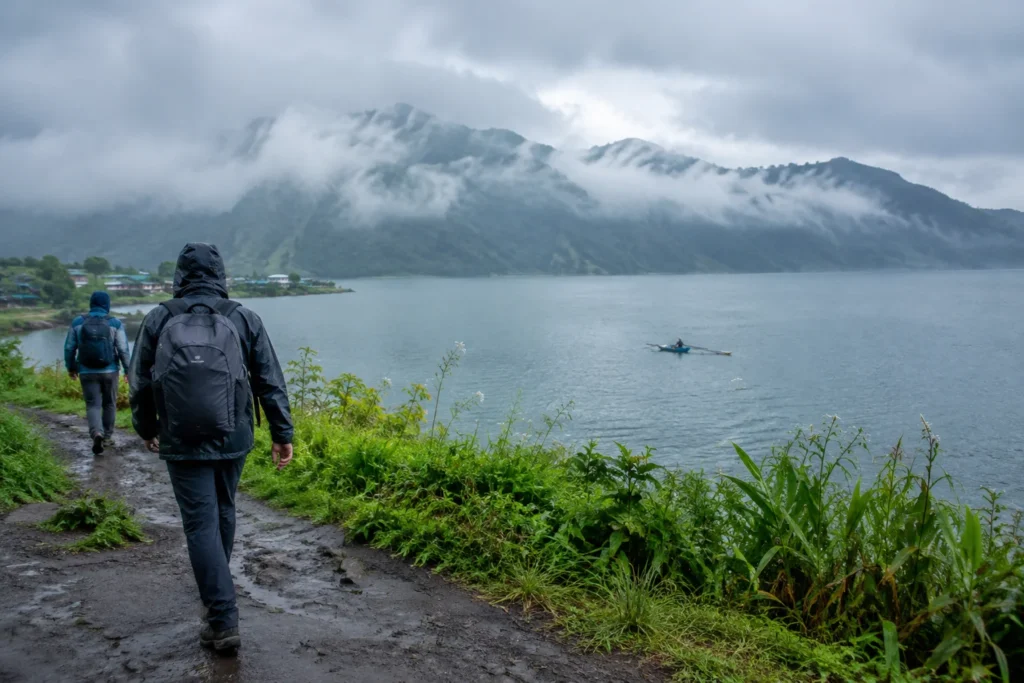
Where Can Visitors Enjoy Views of Lake Batur?
There are several roads and viewpoints around the caldera from which visitors can appreciate the lake, but the best stop depends on your route and the conditions on the day. Some elevated viewpoints look across the water towards the surrounding caldera walls, while lakeside areas offer a closer perspective at water level.
For a broader overview of the lake and the important temple landscape nearby, read Lake Batur and Pura Ulun Danu Batur: The Heart of the Caldera. If you are planning a drive around the area, our guide to exploring the Batur caldera by road covers scenic stops and practical travel considerations.
Conditions can change with cloud, rain and visibility. On some days, the lake appears bright and clear; at other times, mist or low cloud softens the view. Allow flexibility rather than expecting every viewpoint to look exactly like a photograph.
Can You Take a Boat on Lake Batur?
Boat services and local arrangements may be available in particular areas, but availability, routes, prices and operating conditions can change. Do not assume that a boat can be hired spontaneously from any point along the shore.
If a boat trip is important to your plans, arrange it through a recognised local operator or accommodation provider and confirm the departure point, duration, price and safety arrangements before setting out. Follow the operator’s instructions and use the safety equipment provided.
How to Visit Lake Batur Respectfully
- Use designated parking areas and avoid blocking village roads, driveways or access to the shore.
- Ask permission before photographing residents, workers, boats or private property at close range.
- Keep clear of fishing equipment, nets and boats that are being used for work.
- Take rubbish with you and do not leave food packaging or plastic near the water.
- Follow local signs and instructions, especially around temples, village areas and restricted access points.
- Confirm boat arrangements and prices before boarding; do not rely on informal assumptions.
- Choose local businesses respectfully and be patient when services are operating around residents’ daily routines.
These small actions help protect the atmosphere that makes the caldera special. Lake Batur is a beautiful place to visit, but it is also an important part of local life.
Combining Lake Batur with a Mount Batur Sunrise Trek
A sunrise trek and a lakeside visit offer two different ways to experience the caldera. The trek introduces the volcanic slopes and summit views, while the lake gives you a closer look at the wider landscape and the communities that live within it.
If you plan to do both on the same day, consider your energy and return schedule. A sunrise trek usually begins very early, so many visitors prefer to have breakfast and rest before exploring the lakeside area. You can learn more about the activity and available arrangements on our Mount Batur Sunrise Trekking website.
For visitors who want to understand the region rather than simply tick off a viewpoint, this combination can make the day more meaningful: first see the caldera from above, then experience the lake and surrounding villages at a slower pace.
Frequently Asked Questions
Is Lake Batur a natural lake?
Yes. Lake Batur is a freshwater lake located within the Batur caldera, a large volcanic landscape in northeastern Bali.
Do local people fish in Lake Batur?
Fishing is one of the livelihoods and activities associated with the lake. The places and methods used can vary, so visitors should observe from appropriate public areas and avoid disturbing working boats or equipment.
Is Lake Batur important for farming?
Lake Batur is part of the wider water environment of the Kintamani region. However, farms use different water sources depending on their location, so it would be inaccurate to assume that all nearby agriculture is supplied directly by the lake.
Can tourists swim in Lake Batur?
Do not assume that swimming is permitted or suitable at every lakeside location. Check local guidance and conditions before entering the water, and respect any restricted areas.
Can visitors take a boat trip on Lake Batur?
Boat arrangements may be available in certain areas, but services and prices can change. Confirm details with a recognised local operator before travelling to the departure point.
How much time should I allow to visit Lake Batur?
A short photo stop may take only a little time, while a relaxed visit with a meal or a pre-arranged boat activity can take longer. Allow extra time for winding caldera roads and changing weather.
Can I visit Lake Batur after sunrise trekking?
Yes, it can be combined with a sunrise trek, provided you allow time to rest and account for your return journey. A relaxed lakeside stop after breakfast is often more comfortable than rushing straight from the summit.
See More of the Batur Caldera
Lake Batur helps tell the story of the caldera beyond its volcanic origins. Fishing, farming, village life and the surrounding scenery all contribute to the character of this part of Bali. Take time to enjoy the views, learn from local businesses and remember that the lakeside is a living environment as well as a visitor destination.
Planning a sunrise experience in the area? Explore Mount Batur Sunrise Trekking and build a day that includes both the mountain and the lake.
The communities around the caldera depend on more than one source of livelihood. Farming is important across the Kintamani highlands, where the volcanic landscape and cooler conditions support a range of crops. The lake forms part of the region’s wider water environment, while farms occupy different elevations and locations around the caldera.