

Kintamani Coffee: From Volcanic Soil to Your Cup (Why It’s Special)
Most travelers come to Kintamani for one reason: the sunrise trek up Mount Batur. But there’s a second reason this highland region produces some of Indonesia’s most sought-after coffee — and it’s literally under your feet the entire time you’re hiking. The same volcanic soil that makes the trail slippery on the descent is what makes Kintamani Arabica taste unlike any other coffee in Bali.
Every trek we run includes a visit to a local coffee plantation on the way back to your hotel. It’s not a tourist trap upsell — it’s a genuine part of the Kintamani experience, and understanding why this coffee matters transforms that 30-minute stop from “quick photo op” into one of the most interesting parts of your morning. Here’s the full story of volcanic coffee, from the lava fields you just hiked through to the cup in your hands. Ready to book your Mount Batur sunrise trek with coffee plantation visit? Let’s dig into the soil.
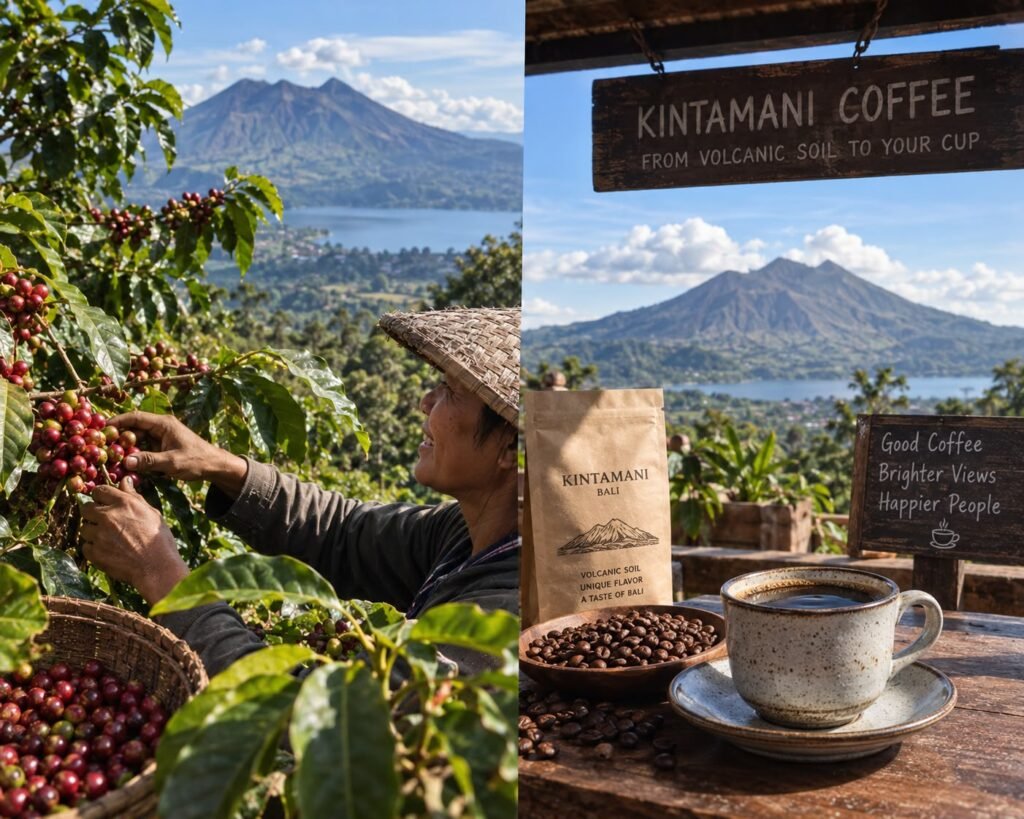
Why Volcanic Soil Makes Better Coffee
Coffee is a fussy plant. It needs specific altitude, temperature, rainfall, and — most importantly — soil chemistry. Volcanic soil is the cheat code.
Mount Batur has erupted over 25 times in the last two centuries. Each eruption spreads mineral-rich ash across the caldera: potassium, phosphorus, magnesium, and trace elements that coffee plants absorb directly. According to standards from the Specialty Coffee Association, volcanic soils consistently produce beans with higher acidity complexity and cleaner flavor profiles than sedimentary soils.
Translation: Kintamani coffee tastes brighter, fruitier, and more complex than coffee grown in the flatlands of southern Bali. You’ll notice notes of citrus, chocolate, and sometimes a hint of spice — all from the volcano you just climbed.
This unique agricultural ecosystem is protected by international conservation laws. To understand how the mountain’s status preserves these farms, read our guide to the Batur UNESCO Global Geopark.
Altitude: The 1,200-Meter Sweet Spot
Kintamani’s coffee plantations sit between 1,000 and 1,500 meters above sea level. This altitude matters because it slows down coffee cherry ripening. The cooler mountain air (the same 10–15°C you felt at the summit) forces the coffee plant to develop more sugars and complex acids in the beans.
Compare this to lowland Robusta coffee grown near sea level: it ripens fast, tastes harsher, and has twice the caffeine but half the flavor. Kintamani Arabica is the opposite — lower caffeine, higher flavor, and a smoother finish that doesn’t need sugar to be enjoyable.
The Coffee Plantation Visit: What Happens
After your trek, your driver takes you to a family-run plantation in the Kintamani district (usually around 09:30–10:00 AM). Here’s what the 30-minute stop looks like:
- Walking the plantation: Your guide shows you the difference between Arabica and Robusta plants, how cherries ripen from green to red, and why altitude matters. You’ll see the same volcanic rocks you stepped over on the trail, now feeding coffee roots.
- Processing demo: Watch how cherries are hand-picked, pulped, fermented, washed, dried, and roasted. Some plantations still use traditional sun-drying methods on raised beds.
- Tasting: You’ll sample 3–5 different coffees: pure Kintamani Arabica, Luwak coffee (civet cat coffee — optional, often extra), and sometimes Balinese herbal teas. No pressure to buy.
- Shopping (optional): If you like what you tasted, you can buy freshly roasted beans to take home. Prices are fair (IDR 100–200K per 250g bag) and support the local farming families.
This stop is included in every Mount Batur sunrise trekking package — join trek, private trek, and jeep tour. It’s a chance to cool down, hydrate, and learn something genuinely interesting about the landscape you just explored.
Kintamani Coffee vs. Other Bali Coffee
| Factor | Kintamani Arabica | Lowland Bali Robusta | Luwak Coffee |
|---|---|---|---|
| Altitude | 1,000–1,500m | Below 500m | Varies |
| Flavor profile | Bright, citrus, chocolate, clean | Bitter, earthy, high caffeine | Smooth, low acidity (if ethical) |
| Processing | Hand-picked, washed, sun-dried | Machine-harvested, bulk processed | Civet digestion (controversial) |
| Price (250g) | IDR 100–200K | IDR 50–80K | IDR 500K–1M+ |
| Best for | Pour-over, filter, espresso | Traditional kopi tubruk | Novelty, not daily drinking |
If you’re a coffee enthusiast, Kintamani Arabica is the one worth bringing home. It’s single-origin, traceable to specific farms, and roasted fresh. Luwak coffee (civet cat coffee) is available at plantations but comes with ethical concerns — many civets are kept in cages and force-fed cherries. If you’re curious, ask your guide about the sourcing before buying.
The Luwak Coffee Question: Should You Try It?
Luwak coffee is famous worldwide, but the reality is complicated. In the wild, civet cats eat only the ripest coffee cherries, digest the fruit, and excrete the beans — which are then collected, cleaned, and roasted. The digestive enzymes supposedly reduce bitterness.
But commercial Luwak coffee often comes from caged civets fed unripe cherries to maximize production. It’s cruel, and the coffee quality is often worse than good Arabica. At Kintamani plantations, you’ll usually see caged civets on display. You can taste the coffee (often IDR 50–100K per cup), but I’d recommend spending that money on a bag of pure Kintamani Arabica instead.
If ethical sourcing matters to you, look for “wild-sourced” or “cage-free” certification — but honestly, a well-roasted Kintamani Arabica from a reputable farm will taste better anyway.
How to Brew Kintamani Coffee at Home
If you buy beans at the plantation, here’s how to get the best flavor back home:
- Grind fresh: Grind just before brewing. Kintamani Arabica has delicate aromatics that fade fast once ground.
- Water temperature: 90–96°C (just off the boil). Boiling water scorches the beans.
- Brew method: Pour-over (V60, Chemex) or French press work best. Avoid automatic drip machines if you can — they don’t extract the full flavor.
- Ratio: 1:16 coffee-to-water (60g coffee per liter of water).
- No sugar needed: Good Kintamani Arabica is naturally sweet. Try it black first.
Frequently Asked Questions
Is the coffee plantation visit mandatory?
No. If you’re tired and want to go straight back to your hotel, just tell your driver. But most people enjoy the break — it’s a chance to sit, hydrate, and learn about the region beyond the trek.
Can I buy coffee to take on the plane?
Yes. Roasted coffee beans are allowed in carry-on or checked luggage (check your airline’s weight limits). Green (unroasted) beans may require agricultural inspection depending on your destination country.
How long does Kintamani coffee stay fresh?
Whole beans stay fresh for 2–3 months if stored in an airtight container away from light and heat. Ground coffee loses flavor within 2–3 weeks. Buy whole beans and grind at home for the best experience.
Is Kintamani coffee organic?
Many small farms in Kintamani are de facto organic (they can’t afford chemical fertilizers), but not all are certified. Ask the plantation if they use pesticides — most family-run operations do not.
What’s the difference between Kintamani and Toraja coffee?
Both are Indonesian highland Arabicas, but from different islands. Toraja (Sulawesi) is earthier and heavier-bodied. Kintamani (Bali) is brighter and more citrusy. If you like Ethiopian or Kenyan coffees, you’ll probably prefer Kintamani. If you like Sumatra Mandheling, you’ll prefer Toraja.
The Volcano in Your Cup
Every sip of Kintamani coffee is a reminder of the landscape you just hiked through. The minerals in the soil, the altitude of the plantations, the cool mountain air — all of it ends up in the flavor profile. It’s not just a souvenir; it’s a continuation of the experience.
When you sit at home three weeks later, grinding beans and pouring hot water, you’ll remember the steam vents at the summit, the loose gravel under your boots, and the sunrise that made the 2 AM alarm worth it. That’s the real value of Kintamani coffee.
Book your sunrise trek today — the coffee plantation visit is included in every package. Taste the volcano for yourself.